
Key points:
- The Leadership Gathering, scheduled Oct. 20-24, is calling participants to prayerfully imagine a new future for The United Methodist Church.
- Two participants in the gathering offer questions that they hope can inform discussions among United Methodists at the meeting in Canada and beyond.
- Worth reconsidering, the two say, is the denomination’s institutionalization, the needs of local churches and the expectations for clergy.
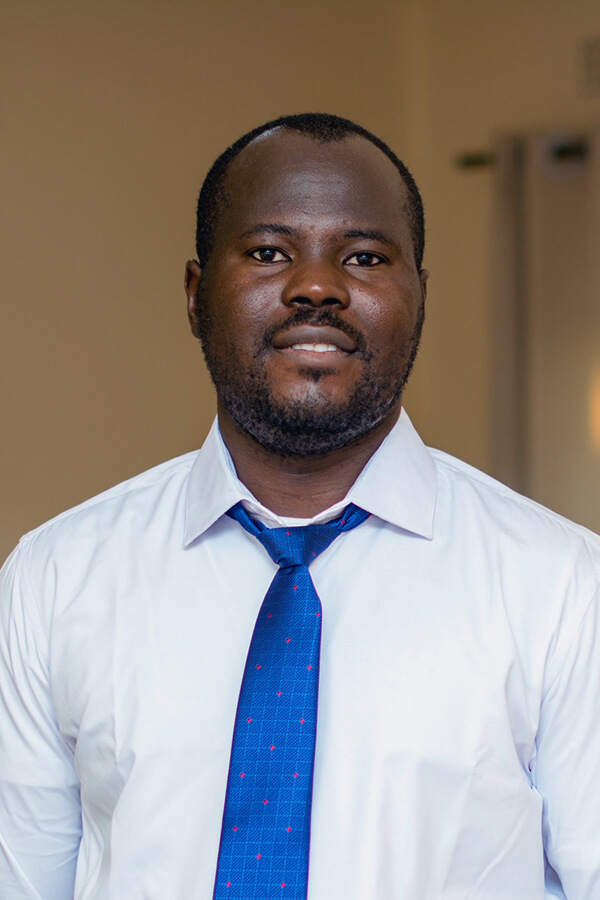
Photo courtesy of the author.
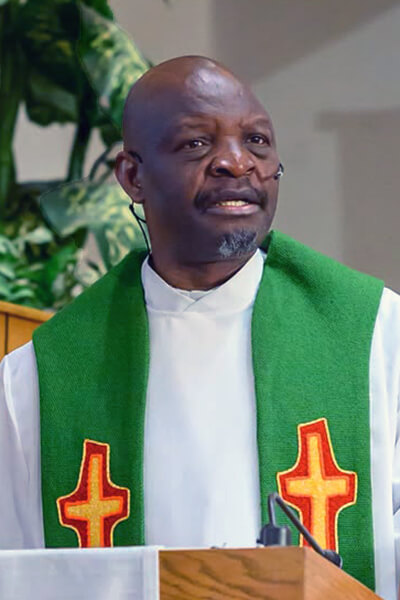
Photo courtesy of the author.
Commentaries
As United Methodists, holy conferencing is at the core of our identity, and the opportunity for United Methodists to gather and reflect on the future of our denomination outside the parliamentary structures of General Conference is a welcome opportunity.
For full disclosure, we are participants at the upcoming Leadership Gathering in Canada. As we look forward to in-person conferencing, we felt it important to invite the larger denomination into a few reflections that may not necessarily be part of the Leadership Gathering’s work, but which we hope can inform our thinking as we look ahead to the upcoming General Conference, regional conferences and beyond.
As we engage in conversations, the invitation is to consider — and reconsider — the conceptual frameworks that guide our mission, governance and ministries, while also attending to the practical realities confronting us.
We believe the work begins with understanding and questioning the underlying assumptions and mindset within which we currently operate, and asking whether the same framework of thought can carry us into the future we seek to build. Part of the exercise will involve a call to self-reflection, using a question John Wesley asked: “Am I a slave to dress, friends, work or habits?”
Dealing with our colonial past
With its rich heritage and history, United Methodism has not been immune to the influence of colonial thought processes and their implications.
By the colonial framework of thought, we consider a few things: the relationship between the metropole and colonies; perspectives on leadership and governance (and its associated structures); relationships across class, race and gender; and socio-economic and political dependency.
We also consider neocolonial efforts alongside this continued framework. How do we decolonize the church, in our thought and practice of ministry from local church to General Conference?
Institutionalization
Churches — not just The United Methodist Church — have become more institutionalized, and this impacts our mission, structure and operations. Creation of structures to resolve seemingly new issues has led to bubbles that sometimes impact efficiency while weighing on budget and human capital.
Questions to be asked include: Do we need more or fewer structures to help us be adaptive to the movement of the Spirit and the changes in society? What parts of our structures, as local churches and as a denomination, need to be left in the past? How do we transform the present in ways that remain flexible enough to not become a stumbling block for ministry in the future? Some structures are necessary, but is the frequency of meetings informed by good financial stewardship?
In a joking but serious way, are there meetings/conferences that could be emails, Teams or Zoom calls? As we think of structures, do we also need to consider consolidation or decentralization of our general agencies as options for efficiency and sustainability? How does regionalization inform the delegation of some responsibilities versus centralized coordination?
Leadership
The question on leadership is not necessarily what type of leaders we want but how we understand church leadership for mission and ministry today and tomorrow.
Is our view on leadership informed by the Western model of centralized power and authority or a collaborative framework focused on a desire to understand before being understood? Is our current leadership model applicable in the different contexts where it is applied? Is it sustainable financially and conceptually as we go into the future?
We also need to ask what is the role of leadership — laity/clergy, superintendency and episcopacy — in the future United Methodist Church?
We have already seen some forms of adaptation, such as team leadership to superintendency compared to a single individual, and at times the team is composed of clergy still serving the local church. Could this be a pragmatic solution to fulfilling the needed tasks of superintendency in a financially viable manner while also undoing the stratification in leadership?
Could the same be applied to episcopacy? What if the material and financial incentives ascribed to leadership, as currently understood by the Church, were taken away in favor of equitable benefits for those serving in local churches?
There are roles that are critical to ministry, but how these operate may need to adapt to our current and future realities.
As we consider leadership, we also need to address some underlying issues of power that we need to wrestle with. What processes and structures create power dynamics within the Church such that they hold us back from our mission? Is it time that we move beyond Roberts’ Rules of Order or parliamentary system to holy conferencing, where understanding is sought rather than winning votes?
Data and mission
As a Church that is exploring the future, we need to understand not only where we are as a denomination, but also as local churches. Many who have studied organizations (including churches), have proposed lifecycles to understand the different stages that organizations go through. Data and observations help us to that end, but doing so requires the utmost form of integrity in how we assess ourselves, not to defend the status quo, but to project the future.
The data is telling us that the U.S. church is experiencing a decline in membership, with still predominantly Caucasian and aging clergy population, the closing of churches in rural communities, the consolidation of annual conferences and the navigation of a socially and religiously polarized environment.
In Africa and the Philippines, we are also seeing rapid membership growth that is unfortunately not accompanied by financial growth, expansion in annual conferences and episcopal areas as well as new diaspora ministries.
Subscribe to our
e-newsletter
Managing growth and financial sustainability is a challenge that we are called to consider from both a conceptual and practical perspective. From a practical perspective, we need to deal with data integrity and how to effectively use demographic and other forms of data in our missional work.
Evangelism
We offer that, as a denomination, we need to relearn and reengage in evangelism in the post-modern world.
There are still parts of the world, even in the Western hemisphere, that still need to hear the good news; we just need new tools and language that speaks to the current generation.
As we evangelize, we have to embrace cross-cultural ministry — not in the format we are used to but in evolving ways that has proven to be effective. Models used in the past were focused on hybridity, but diaspora ministries have seen remarkable progress in areas where we have Filipino and Zimbabwean congregations successfully launched in other countries.
Our call is to learn from these models and reinforce partnerships across annual conferences (around learnings and cross-conference appointments) as we make data-informed and spirit-filled decisions on church planting.
Clergy deployment and financial stability
There comes a time we need to ask ourselves: How do we support new church plants with an aging clergy population (at least in the U.S.), or how do we take care of pastors as membership grows with decent pay (in many parts of Africa and the Philippines)?
With this comes another question: How do we define the role of clergy in the future of the denomination?
An observation across denominations is the over-professionalization of the clergy based on inward needs for administration, pastoral care and other functions within the Church. This has contributed to the stratification of ministerial orders and, when coupled with financial challenges, has undoubtedly influenced some missional decisions, such as whether we appoint ordained elders to local churches unable to meet conference minimum compensation requirements or not (without undermining equitable compensation plans).
From a pragmatic perspective, we need to tackle the cost and duration of seminary education. Seminary education is expensive! Though we invest in it through scholarships and flexibility on residency requirements, affordability is a limiting factor, and economically less privileged candidates may not make it.
Seminary in the U.S. costs at least as much as and takes longer than other graduate degrees that are financially more rewarding. How do we creatively reimagine seminary education in terms of cost, curriculum, format and expectations for the current and future needs of the church?
The church in Africa also needs to acknowledge that four or five years of undergraduate theological education is a challenge. Is it not time to move to graduate theological education? Does an undergraduate degree in a different field contribute to clergy effectiveness and financial stability?
We offer that it might be time to seriously consider encouraging bivocational ministry. Bivocational ministry has benefits beyond financial stability, as clergy learn new skills and bring important insights otherwise not obtainable within the church.
Appointments need to stay as missional decisions, and at times the only practical solution is to have a bivocational clergy serve the congregation.
This invites reflection on whether ordained clergy should only be full time in the local church (as is the silent expectation). It makes itinerancy easy but also creates challenges.
What if our greatest opportunity for clergy effectiveness lies in the strengths of bivocational ministry, creating an opportunity to unleash the prophetic message without worries of subsistence?
A call to care
We live in a world that is increasingly polarized and self-centered. As we reflect on the present and future of our denomination, we are invited to hold in thoughts, prayer and service those who may lean (ideologically, socially, politically, etc.) differently from us.
As we prepare for the upcoming Leadership Gathering, your prayers, ideas and thoughts are appreciated as we contribute to this important work.
Longe, a bivocational licensed local pastor in the Great Plains Conference, is the pastor of Oxford United Methodist Church in Oxford, Nebraska. Nyarota, an ordained elder in the Zimbabwe East Conference, serves in an ecumenical appointment with the United Church of Canada.
News media contact: Julie Dwyer at (615) 742-5470 or [email protected]. To read more United Methodist news, subscribe to the free UM News Digest.


