
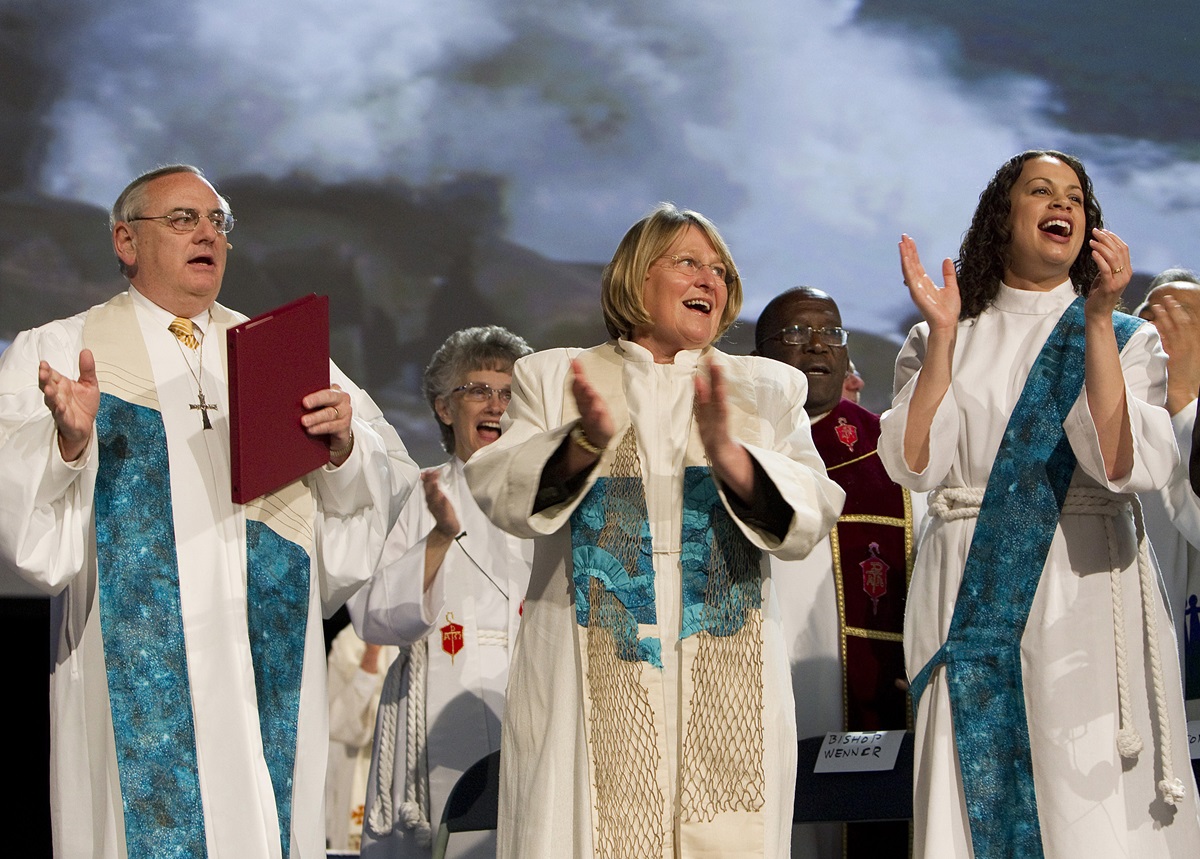
Women pastors in The United Methodist Church are finding more acceptance and more reasons to stay in local church ministry than any time in the denomination’s history, according to a survey of women elders.
“Retention [of women pastors] has improved, but the question is, ‘What more can be done?’”
— The Rev. Hee An Choi, director of the Anna Howard Shaw Center
Still, women are more likely to leave congregations for ministries beyond congregations, citing lack of support by bishops and cabinets and underuse of their “gifts” for ministry, the survey found.
And racial-ethnic clergywomen are still less likely than white women to experience acceptance and support from their congregations and their supervisors.
Patterned after a similar study done 20 years ago, the United Methodist Clergywomen Retention Survey, conducted in 2010-12, was co-sponsored by the Anna Howard Shaw Center at Boston University School of Theology and the Clergy Lifelong Learning office of the United Methodist Board of Higher Education and Ministry. Of the more than 10,300 active and retired women clergy in the United States, 1,906 women participated in the survey. Among the key findings:
- Women clergy serving local congregations have increased by 20 percent to 30 percent in all five U.S. jurisdictions. In each region, 95 percent or more of clergywomen are appointed to local churches, either as senior or associate or assistant pastors.
- The most dramatic jump in women serving local church appointments has been among African-American women (from 59 percent 20 years ago to 98 percent of those surveyed). Asian and Asian-American clergywomen serving congregations increased from 65 percent to nearly 100 percent of those participating in the survey.
- White clergywomen and racial-ethnic clergywomen leave and later return to local church ministry at about the same rate (17.8 percent versus 17.4 percent), and the rates are similar regardless of the marital status of a clergywomen.
- The No. 1 reason women leave local church ministry is to pursue extension ministry (beyond the local church); 22 percent cited that reason for leaving.
- The number of women clergy citing “lack of support from the hierarchical system” as their reason for leaving actually increased. The number of racial-ethnic women citing this reason rose from 27 percent 20 years ago to 44 percent in this research.
Men and women who accept the call to ministry — particularly those who are called to be elders — most often say they are called primarily to serve congregations. However, for many, their experience in local congregations — from dealing with some truculent laity to the pressures of oversight by superintendents, bishops and cabinets and boards of ordained ministries — often results in gifted pastors fleeing the pulpit for pastoral counseling, conference and churchwide agency posts or some other expression of ministry.
That the status and role of United Methodist clergywomen has improved in the past 20 years is evident, says the Rev. Hee An Choi, director of the Anna Howard Shaw Center and one of the researchers on this project. Still, she says, more study is needed to determine more practical and long-lasting solutions to supporting and inspiring excellence in women who answer the call to ministry.
“Retention [of women pastors] has improved, but the question is, ‘What more can be done?’” said Choi, an assistant professor of practical theology at Boston University.
“I believe the church must look more closely at the appointment system in light of the impact on all women, particularly racial-ethnic women. There are still discrepancies in job security, opportunities to serve larger congregations and, related to that, to have the salaries that come with upward mobility,” she added.
The Rev. HiRho Park, director of lifelong learning with the Board of Higher Education and Ministry, hailed the “good news” that “clergywomen are making progress.” She pointed to a small but growing number of women now serving as lead pastors of 1,000-plus members. There were 64 women leading large U.S. churches in 2008; recent numbers found 137 women senior pastors of large churches.
However, women of color occupy only two of these pulpits, and the denomination has yet to elect an Asian or Native-American woman as bishop — all signs, Park says, that the church still struggles with institutional racism, sexism, work-family stress that affects women disproportionately, and the “economic stratification” within the United Methodist clergy system.
Dawn Wiggins Hare, a laywoman and top executive of the United Methodist Commission on the Status and Role of Women also welcomed the positive upswing in women serving local churches. At the same time, she expressed “tremendous sadness” that some clergywomen still cite lack of support and “rejection by churches” as reason they feel forced to leave congregational ministry.
She called for continued study and action to bring equity and fairness to the ministerial system. “We have heard the cry of clergywomen asking for support and affirmation of the authority upon which their ordination is based,” Hare declared.
*M. Garlinda Burton, a writer, editor and diversity and ethics consultant, is a member of Hobson United Methodist Church, Nashville, Tenn.
Like what you're reading? Support the ministry of UM News! Your support ensures the latest denominational news, dynamic stories and informative articles will continue to connect our global community. Make a tax-deductible donation at ResourceUMC.org/GiveUMCom.


