
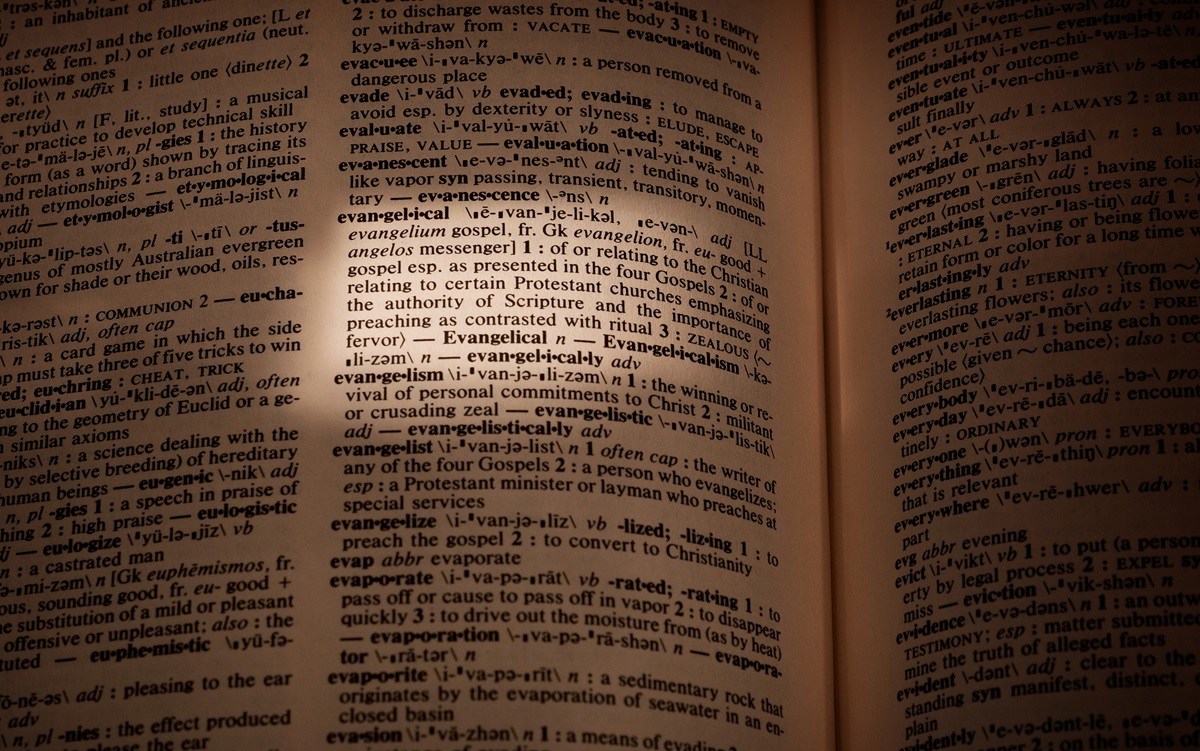
When it comes to church debates, the Revs. Thomas Lambrecht and Pamela Lightsey often stand on different sides of the theological aisle.
Lambrecht is the vice president and general manager of Good News, a United Methodist evangelical group that, among other things, advocates for maintaining church teachings on homosexuality.
Lightsey, an associate dean and theology professor at United Methodist Boston University School of Theology, identifies as the first out African-American queer lesbian clergy in the denomination.
But both Lambrecht and Lightsey proudly claim the name evangelical. Just don’t call either of them fundamentalists.
“Fundamentalism today is really related to a fairly rigid understanding of Scripture — an almost literalistic understanding of Scripture, things like a six-day creation,” Lambrecht said. “I would distinguish that from evangelicalism, which still maintains the primary authority of Scripture but is willing to look at a more nuanced interpretation.”
There’s good reason for United Methodists — of varied theological perspectives and political persuasions — to self-identify as evangelical. No less than John Wesley himself applied the term to the Methodist movement he founded.
“‘Evangelical’ was very much part of Wesley’s vocabulary,” said the Rev. Steve Manskar, director of Wesleyan leadership at United Methodist Discipleship Ministries. “He definitely regarded himself to be an evangelical Christian, and the people called Methodists to be an evangelical movement of the Holy Spirit within and for the Church of England and the world.”
In his 1767 sermon “The Witness of the Spirit,” Wesley preached that Methodists — by God’s blessing — had recovered “this great evangelical truth.” Wesley explained the truth is “that we are the children of God.”
The proper response to this truth, he said, “is ‘the fruit of the Spirit;’ namely, ‘love, joy, peace, long-suffering, gentleness, goodness.’ ”
The word “evangelical” comes from the Greek for “good messenger.” Not surprisingly, both Lambrecht and Lightsey see an evangelical’s role foremost about sharing the good news — the gospel message of Jesus Christ.
However, the two offer slightly different takes on what that entails.
For Lightsey, being an evangelical means “helping usher in the Beloved Kin-dom of God.” That calls for working to ensure the poor are raised up, the sick receive adequate care, children are protected, discrimination is eradicated and war ended, she said. Lightsey, who describes herself as a progressive evangelical, contributed to the book “Prophetic Evangelicals: Envisioning a Just and Peaceable Kingdom.”
For Lambrecht, being an evangelical means recognizing the primary authority of Scripture in living out the Christian faith. It also means maintaining a personal relationship with Jesus Christ and believing that salvation comes through Christ alone, he said. The obligation for evangelicals, then, is to invite people into a relationship with Christ.
Lambrecht stressed that the labels “fundamentalist” and “evangelical” are not synonymous. He and other leaders of Good News strenuously object to their group being called fundamentalist.
For one thing, the rise of Christian fundamentalism is a more recent development than the evangelical revival of Wesley’s day. Fundamentalism gained popularity in the late 19th and early 20th centuries, especially with the spread of “The Fundamentals: Testimony to the Truth,” published from 1910 to 1915.
The series of 12 pamphlets argued that to be Christian, a person must affirm biblical inerrancy, the virgin birth of Jesus, substitutionary atonement, the literal resurrection of Christ, and the Second Coming of Christ.
While evangelicals agree with most of these teachings, the nature of Christ’s atonement and the best way to interpret Scripture remain matters of debate, said the Rev. David F. Watson. He is dean, vice president and New Testament professor at United Methodist United Theological Seminary.
Lambrecht said his biblical interpretation “incorporates historical context as well as scientific information and other information we can bring to bear on the text.”
The official United Methodist teaching, as stated in the Confession of Faith, is that “the Holy Bible, Old and New Testaments, reveals the Word of God so far as it is necessary for our salvation.”
In the early 20th century, the big debate was “the fundamentalist-modernist controversy,” said the Rev. William B. Lawrence. He is professor of American church history and retired dean of Southern Methodist University’s Perkins School of Theology.
Fundamentalists and modernists battled about how to regard biological evolution, whether to engage in the Social Gospel and most significantly, how to read the Bible.
In a famous 1922 sermon “Shall the Fundamentalists Win?,” the Rev. Harry Emerson Fosdick railed against what he saw as fundamentalist intolerance and pleaded for fundamentalists and those of more liberal opinions to continue worshipping together in evangelical churches.
“There is one thing I am sure of: courtesy and kindliness and tolerance and humility and fairness are right,” he preached. “Opinions may be mistaken; love never is.”
The sermon ended up costing Fosdick his Presbyterian pulpit, but he went on to become the founding pastor of the still-thriving Riverside Church in New York. The hymn he wrote for the church’s dedication, “God of Grace and God of Glory,” remains a worship staple.
Like Fosdick, Lawrence sees evangelical as a much broader term than fundamentalist. It has changed its meaning over the centuries from referring broadly to Protestants to more specific groups, such as the National Association of Evangelicals.
In more recent decades, Lawrence noted, the term evangelical has become closely associated with particular point of view in U.S. politics and particularly one political party.
But that’s not how Wesley nor many of today’s United Methodists understand the appellation.
“Wesley’s approach to teaching salvation was considered an evangelical approach — it was Christ-centered,” Lawrence said.
“It was the responsibility of evangelicals to engage both in spiritual habits that were matters of personal discipline and of social discipline.”
In “The Character of a Methodist,” Wesley offered a description of Methodists that also serves as a description of an ideal evangelical.
A Methodist, he said, “always exercises his love to God by praying without ceasing, rejoicing evermore, and in everything giving thanks.” Wesley added, “this commandment is written in his heart, ‘That he who loveth God, love his brother also.’ ”
Hahn is a multimedia news reporter for United Methodist News Service. Contact her at (615) 742-5470 or [email protected]. To read more United Methodist news, subscribe to the free Daily or Weekly Digests
Like what you're reading? Support the ministry of UM News! Your support ensures the latest denominational news, dynamic stories and informative articles will continue to connect our global community. Make a tax-deductible donation at ResourceUMC.org/GiveUMCom.


