
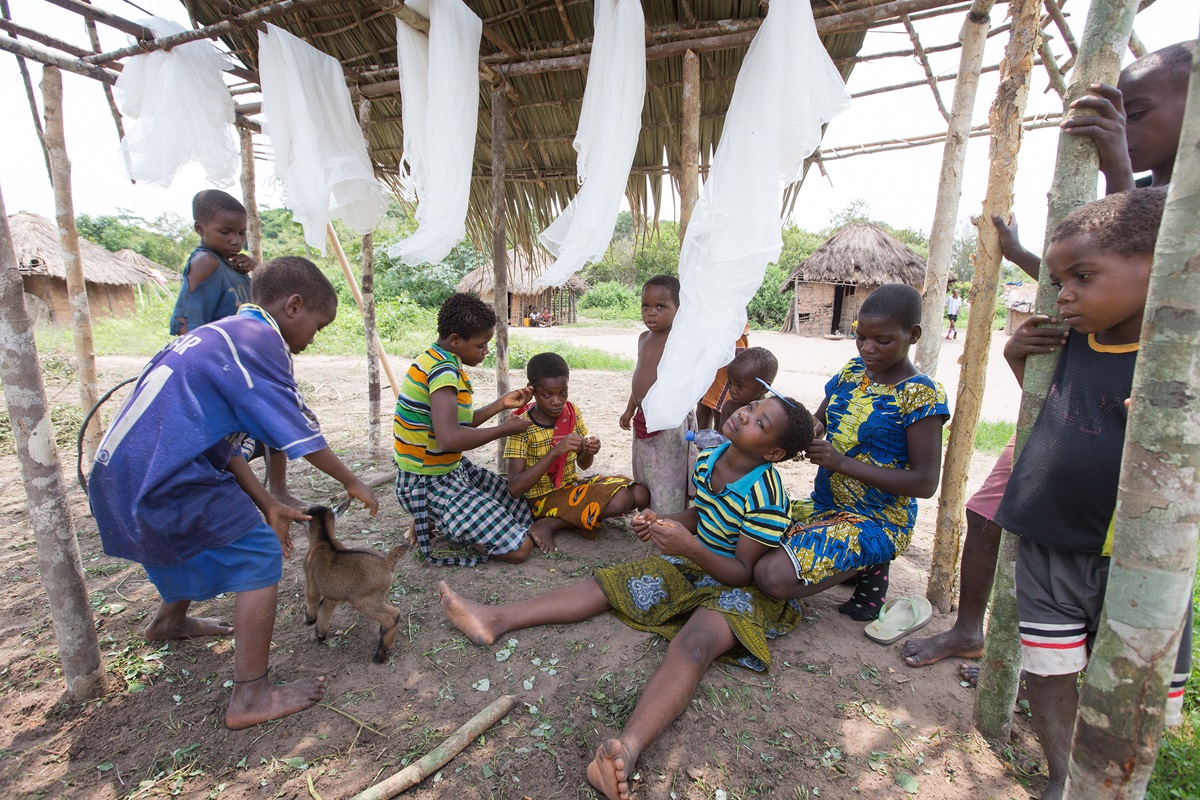
In the southern Maniema province, United Methodists who fled insecurity are beginning to return to their communities.
The hope for peace is coming back as the militia begins to lay down arms. At the end of April, about 1,350 militiamen had laid down their weapons, according to Kizangilou Moussa Piton, sector chief of BanguBangu Salamabila. He said some of the militia members plan to integrate into civilian life, while others hope to join the military.
“The fact that the militiamen are laying down their arms gives hope for peace and brings back the displaced, including the United Methodists who had fled their homes,” said the Rev. Augustin Bosenga Mombele, district superintendent in Samba.
The southern part of the province where the Kasongo-Samba District is located has been insecure since January 2017 due to Mai-Mai Malaïka rebels, local militia who have been fighting the Armed Forces of the Democratic Republic of Congo. Kasongo-Samba is located more than 300 kilometers (about 190 miles) from Kindu, the capital of Maniema.
The unrest led to several abuses, including violence against women and girls. In 2017, more than 5,000 cases of sexual violence were recorded, a situation that was condemned by The United Methodist Church in eastern Congo.
Local authorities have been reaching out to people who have escaped insecurity in the bush, urging them to return to their villages and continue with their normal activities.
Germain Mupasa, a representative of the Central Conference of Congo in the Division of Youth Ministries of the General Office for Discipleship, said he is happy to see people return to their circles.
“It’s a glimmer of hope that is emerging. I can only encourage the politico-administrative authorities for the efforts they are making to get people back home.”
Mupasa, who also is the vice president of the National Federation of Protestant Youth for the Church of Christ in Congo, added that the authorities must work on the causes that led to the outbreak of the war and find durable solutions.
The United Methodist Church’s policy calls for ministry with the poor, he said, and many of those who are returning to their communities have lost everything.
“They are sometimes homeless, without food,” he said, noting that the young people in the region have to be in solidarity with them to see how to help them.
“It will be necessary for young people to work also to show them and remind them of the way of God so that they believe the next day will not be the same.”
East Congo Bishop Gabriel Yemba Unda saluted the efforts made for the return of peace in southern Maniema. He said he prayed with other United Methodists and Christian partners for the return of peace in the Kasongo-Samba District.
“And when we learn that peace is starting to come back and that the protagonists are beginning to lay down their arms, we only have to say thanks to God because he has answered our prayers.”
Unda urged everyone to welcome the militia as his or her brother and with love.
“They are not enemies. They are the children of this country. It is the children who are lost. And when they come back, we must welcome them with joy. The story of the prodigal son must teach us to welcome those who come back,” he said.
Unda said those who were displaced also must be welcomed back with open arms.
“We continue to pray for the displaced. The (recent) help we have brought does not mean that we have finished all the needs of those who have not yet returned home. We pray to the Lord that we find ways to assist them. They are all children of God.”
Earlier this month, Leila Zerrougui, the United Nation’s DRC Representative of the Secretary-General, met with leaders in Maniema.
She announced a reinforcement of the presence of the U.N. mission to put an end to the atrocities of armed groups in the province.
The Rev. Celestin Malamba Lohalo, who serves on the board of directors for the United Methodist Committee on Relief, was part of the United Methodist team who met with Zerrougui.
He said the increased U.N. presence would have a positive impact on the daily lives of the faithful in Maniema.
“This return will create jobs … This presence will also help to fight against human rights violations, because with the presence of U.N. personnel on the ground, it will scare the local authorities, the security forces, not to commit acts of violation of human rights.”
Londe is a communicator for the East Congo Conference. News media contact: Vicki Brown at (615) 742-5470 or [email protected]. To read more United Methodist news, subscribe to the free Daily or Weekly Digests.
Like what you're reading? Support the ministry of UM News! Your support ensures the latest denominational news, dynamic stories and informative articles will continue to connect our global community. Make a tax-deductible donation at ResourceUMC.org/GiveUMCom.


