
President Barack Obama’s immigration plan offers “a word of mercy and a measure of justice,” said United Methodist Bishop Minerva Carcaño, co-chair of the denomination’s interagency task force on immigration reform.
The plan means undocumented immigrants who have lived in the U.S. for more than five years and have children who are U.S. citizens or residents “can now come out of the shadows,” said Carcaño, episcopal leader for the California-Pacific Conference.
The United Methodist Council of Bishops has long supported immigration reform and encouraged local communities “to participate in ministries of mercy and justice,” said Bishop Julius C. Trimble, co-chair of the interagency task force on immigration reform and episcopal leader of the Iowa Conference.
Trimble said critics have attacked the president’s action before, saying reform is the responsibility of Congress.
“Nevertheless, the question remains unanswered as to why the House of Representatives will not act on a Senate-approved bill,” he said.
The United Methodist Board of Church and Society's top executive, the Rev. Susan Henry-Crowe, has written a letter to Obama commending him on extending deferred status to more than 5 million undocumented immigrants. But she emphasizes that this is just "a critical first step."
The letter thanks the president for shutting down the Secure Communities program that has “increased racial profiling” and further increased an atmosphere of fear among immigrant communities.
Obama said the immigration system has been broken for decades and he challenged Congress to pass his plan or “Pass a bill.”
Answer to prayers
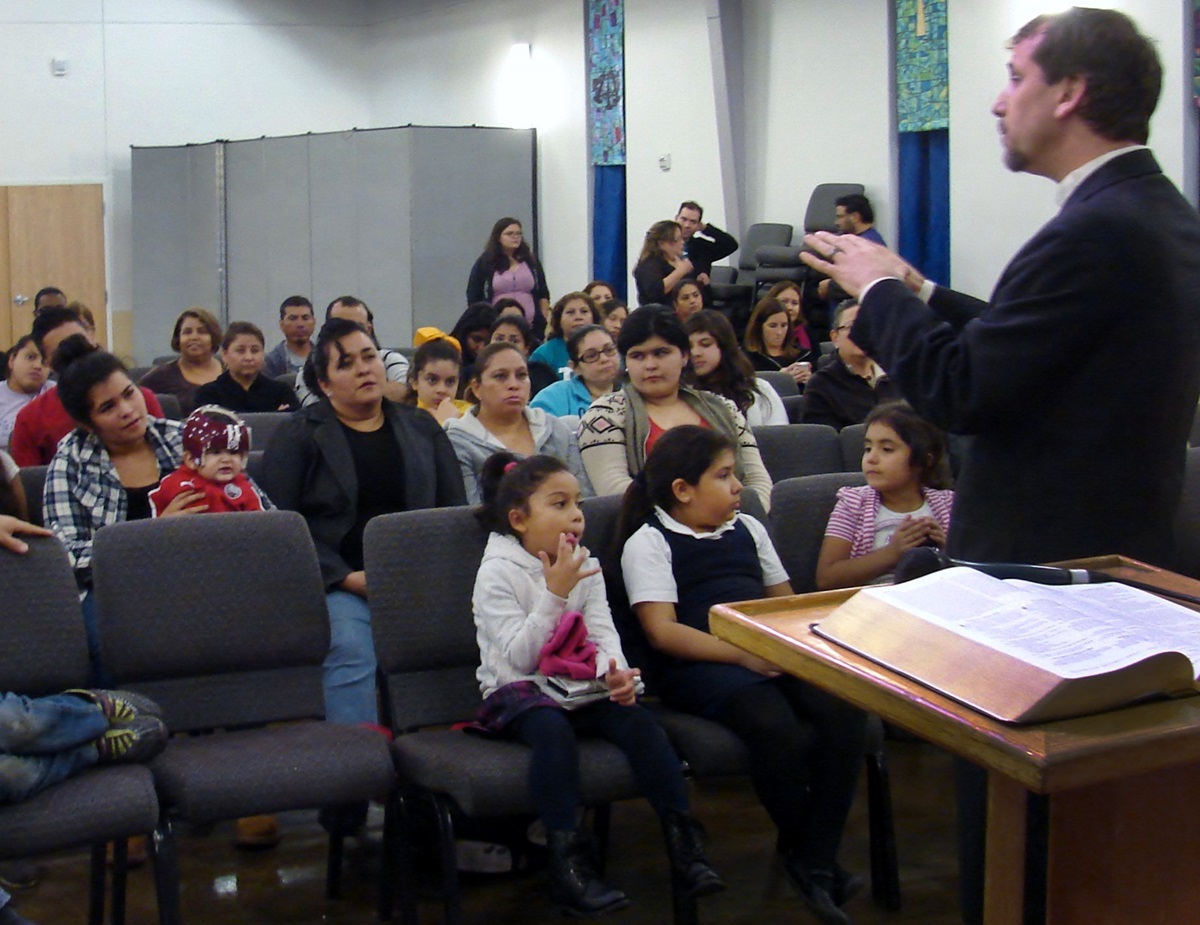
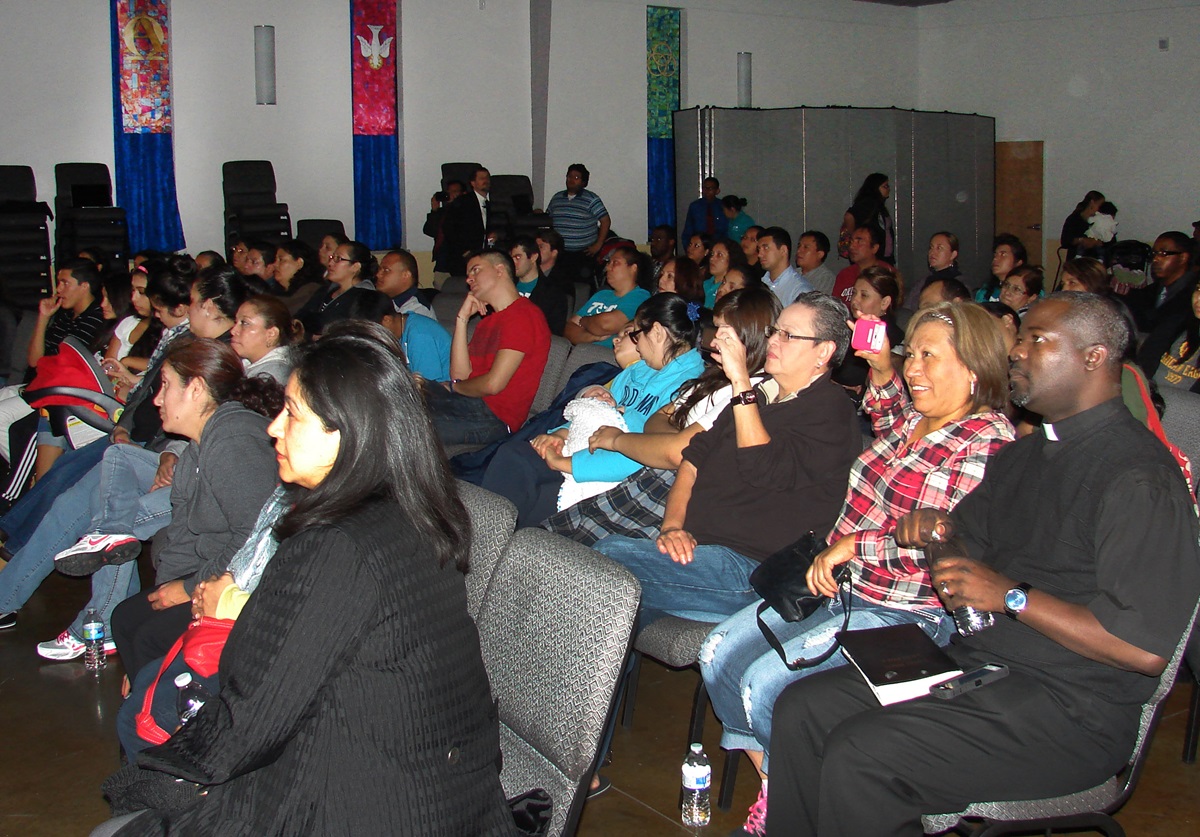
At Christ’s Foundry United Methodist Church, a Hispanic congregation in Dallas, about 200 people gathered at a watch party for Obama’s address.
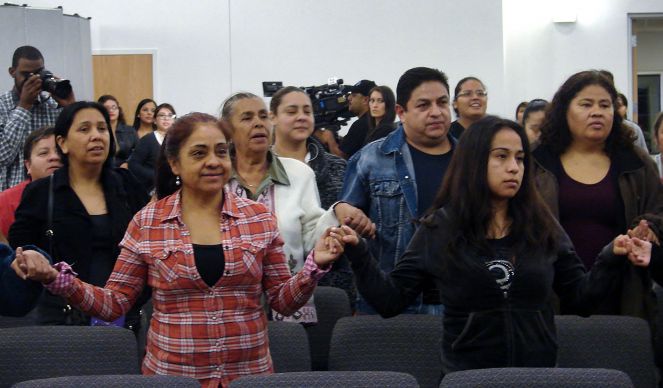
They applauded at times, and afterwards held hands and sang “We Shall Overcome.”
The Rev. Owen Ross, who leads the church and was a Peace Corps worker in Ecuador, praised Obama’s actions.
“A lot of our prayers were answered tonight,” he said. “It’s a great first step, and a great night for America.”
Ross pointed to an undocumented woman in his congregation named Rosa, a single mother whose young daughter does have legal status.
“She is who the president is doing this for,” he said, noting that she shares a room with her daughter in another family’s house, and has had trouble keeping a job due to her lack of legal status.
Rosa, speaking through an interpreter, said she’s looking forward to being able to move about without fear of deportation.
“My sister died last year in Mexico, and I was not able to go,” she said. “So many families have been separated.”
Ross said he was disappointed Obama’s order did not cover the parents of undocumented immigrants who came to the United States as children and who through a 2012 executive order got temporary relief from deportation and work permits.
“That would be another large group,” Ross said.
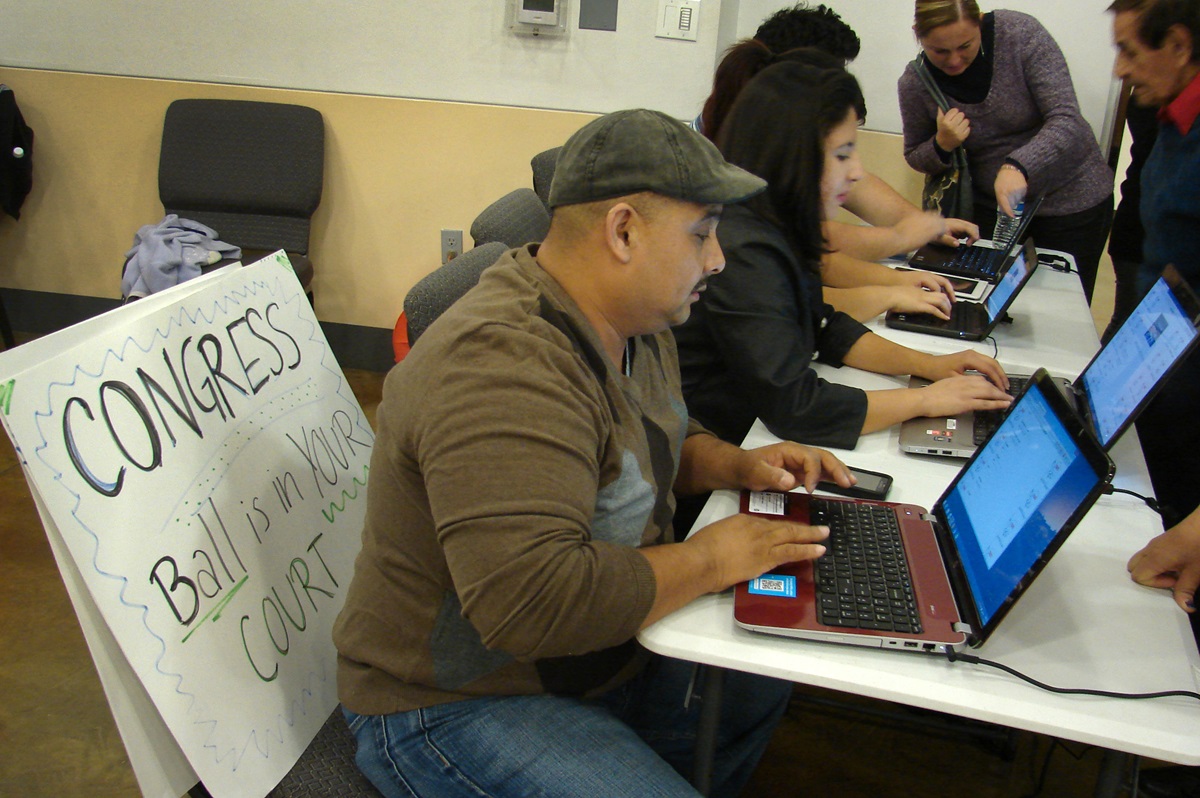
But he repeated his appreciation for the president’s new actions. And he said Christ’s Foundry United Methodist would be helping Rosa and others fill out the paperwork necessary to gain legal status.
Continuing support
Carcaño urged United Methodists to call and send letters to their congressional leaders supporting the president’s plan. She also called on United Methodists to contribute to the cost of legalization processes for immigrant families.
“Immigrants are some of the hardest working people in this country yet they are also among the lowest paid,” she said. “Immigration application fees must be set within their economic reach. We have seen this need as we have encouraged young people to apply for DACA (Deferred Action for Childhood Arrivals). Many qualify but have not applied because they cannot afford the application cost.”
Eligible immigrants will need a “massive level of assistance” in the months that follow, agreed Rob Rutand-Brown, director of United Methodist National Justice for our Neighbors.
“These vulnerable immigrants will be targeted by unscrupulous people eager to take their money,” he said.
Brown said the national organization which offers free legal assistance to immigrants will be stepping up its efforts.
“We will strengthen our partnerships—both within The United Methodist Church and beyond—throughout the cities we serve,” he said.
Justice for millions more
The executive order is a cause for celebration, but there are still more than 7 million left out of the plan, said Carol Barton, United Methodist Women. She coordinates the Immigrant & Civil Rights Initiative.
Barton said that includes the Central American women and children who arrived this summer fleeing violence, only to be detained, forced to wear electronic ankle bracelets, or served pending deportation papers.
“That includes the parents of DREAM students, who have risked so much for this day only to be disappointed. That includes those who have committed non-violent crimes in the past, have paid their debt to society, are important members of our families, yet face deportation. As Christians we believe in forgiveness and restorative justice, not perpetual punishment,” Barton said.
The executive action is also partial and temporary, Barton said.
“It does not guarantee permanent status, nor health care and social welfare benefits. It can be revoked at any time. Thus, as we work to assist all those eligible for deferred status, we will also continue to advocate for just immigration reform that includes all currently in the U.S. and addresses future flows of migration.
“And we will continue to accompany those facing more intense criminalization, detention and deportation, until they, too, can celebrate,” she said.
Gilbert is a multimedia news reporter for United Methodist News Service. Hodges is a Dallas-based writer for UMNS. Contact them at (615) 742-5470 or [email protected].
Like what you're reading? Support the ministry of UM News! Your support ensures the latest denominational news, dynamic stories and informative articles will continue to connect our global community. Make a tax-deductible donation at ResourceUMC.org/GiveUMCom.


