
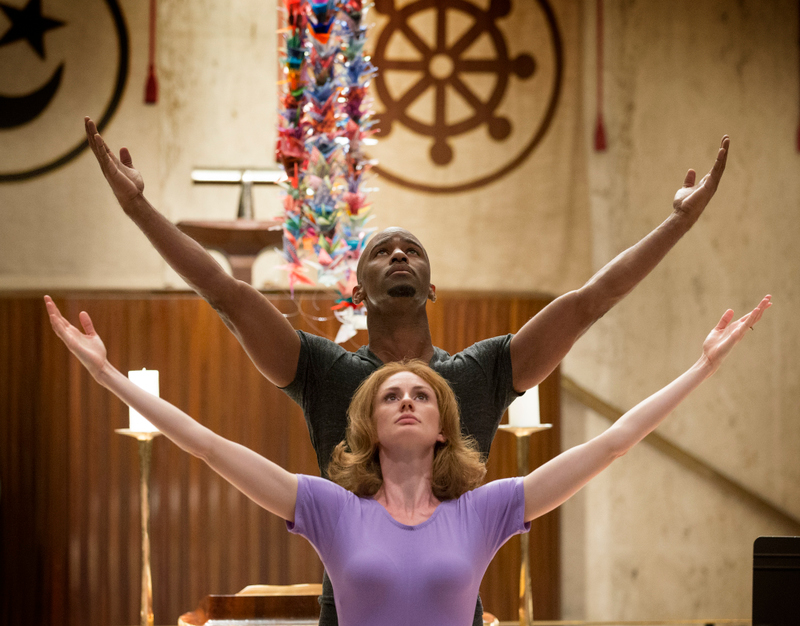
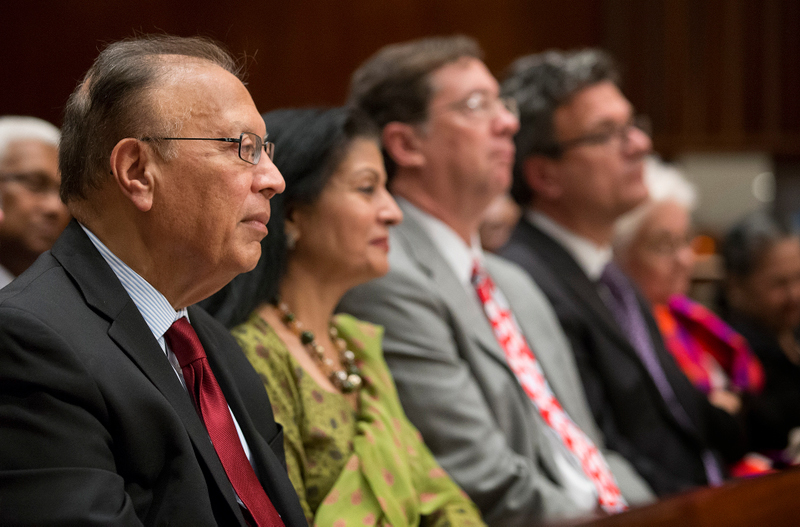
At a celebration of a United Methodist-owned building “dedicated to the things that make for peace,” it was fitting that the honored guests included a Nobel Peace Prize winner, an ambassador who has pioneered peace initiatives at the United Nations and those promoting women’s empowerment as a means to peace.
For others who gathered Oct. 9 in the chapel of the Church Center for the United Nations, the 50th anniversary was a time to remember the building’s beginnings and the people — staff, volunteers and countless grassroots advocates from around the world — who have kept the CCUN humming.
The hosts were Harriett Olson, United Methodist Women: Jim Winkler, United Methodist Board of Church and Society, and Thomas Kemper, United Methodist Board of Global Ministries, whose agencies and their predecessor bodies have maintained a steady denominational presence directly across from the U.N.
Dedicated on Sept. 23, 1963, the CCUN was designed as “a hub for the world’s peoples,” noted Olson, UMW’s top executive, and to provide faith groups and nongovernmental organizations with access to U.N.diplomats, staff and their governments.
Peggy Billings, a UMW staff member who served as a missionary before she arrived at the CCUN in 1963, knew the work of the U.N. in post-war Korea but “was unprepared for the scope of what I saw when I got here,” she said.
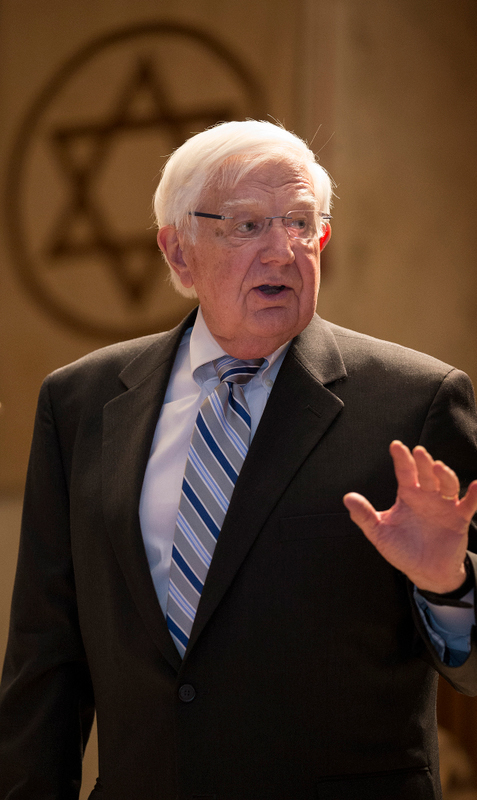
She and the Rev. Robert McClean, who served in the U.N. office for Church and Society for nearly 25 years, were among the staff who witnessed the development of the CCUN into a place where the voiceless could find a voice.
Sometimes, the impossible even became the possible. “Yes, the world did become a better place,” McClean said. “We need to continue doing the same things today.”
‘A spiritual shelter’
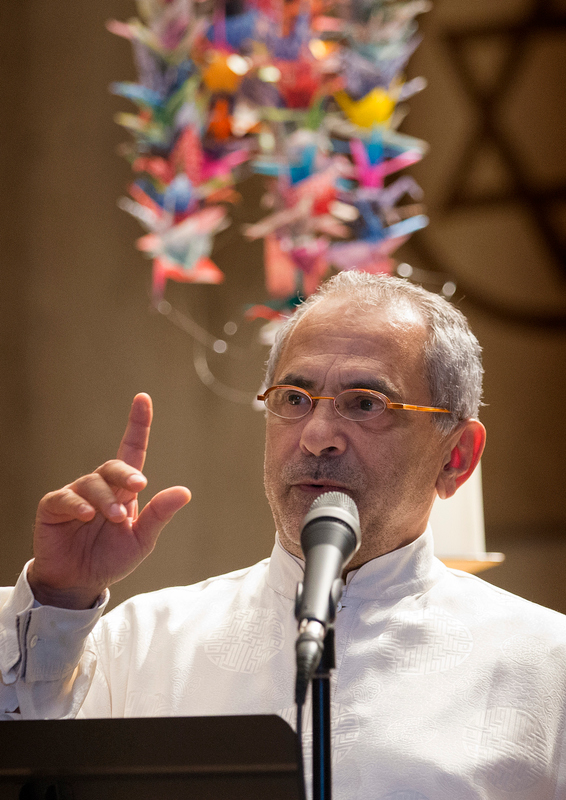
For José Ramos-Horta — whose years of work for the independence of East Timor from Indonesian rule won him the 1996 Nobel Peace Prize and the presidency of his country — the CCUN was “a spiritual shelter.”
The building also functioned as a workplace where, over the years, he would copy “thousands and thousands of pages” and get practical assistance with translation or crafting a press release. “Do not underestimate … the hope, the comfort that this place, your people, gives to people,” Horta told the United Methodist representatives.
“This building has been a witness of causes that seem to be impossible dreams,” he said.
Ambassador Anwarul K. Chowdhury, a career diplomat, former Bangladesh representative and recently the Senior Special Adviser to the U.N. General Assembly president, noted with appreciation that he still feels “more comfortable” at the CCUN “than across the street. “
Although people in both places work for peace, “the spirituality that exists here is something that does not exist there,” he said.
Chowdhury, who pioneered the General Assembly’s Programme of Action on Culture of Peace, was president of the U.N. Security Council when it adopted Resolution 1325 in 2000, which recognizes the role and contribution of women in peace and security.
“Neither development nor peace is possible without women,” he reminded the gathering.
Saluting the women
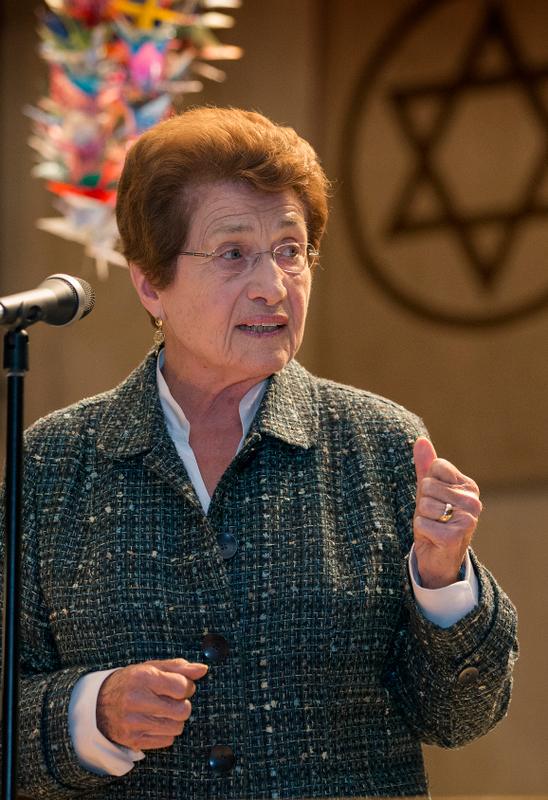
Cora Weiss, president of the Hague Appeal for Peace, now connected with Peace Boat U.S., is one of those women. She has been a CCUN tenant for 41 years and appreciates the faith response by United Methodists.
“ ‘What is faith worth,’ asked Gandhi, ‘if it is not translated into action?’” she quoted as she presented “a peek at your next 50 years,” and her hopes of what can be accomplished for peace and human rights.
Women were as much the architects of the creation of the CCUN as men were, observed Lakshmi Puri, assistant secretary general of the U.N. and deputy executive director of U.N. Women, which is a relatively new organization itself.
“I know how committed you are,” she said. “You have been part of our creation, you have supported us.”
Roma Bhattacharjea, who works on gender issues for the U.N. Development Programme, recalled the good works of Isobel Thoburn, a Methodist missionary who founded a women’s college in Lucknow, India, whose graduates include Bhattacharjea’s mother.
The Rev. Maria Benavides of El Salvador is American Baptist but said she “learned to be very ecumenical with the Methodists.”
A “dear friend” of the United Methodist U.N. office, she said she was glad to offer a testimony, because the work of The United Methodist Church at the U.N. is important. “Across the street, many of them are talking (about issues), but they don’t know how to work and get their feet dirty,” Benavides explained.
*Bloom is a United Methodist News Service multimedia reporter based in New York. Follow her at http://twitter.com/umcscribe and contact her at (646) 369-3759 or[email protected].
Like what you're reading? Support the ministry of UM News! Your support ensures the latest denominational news, dynamic stories and informative articles will continue to connect our global community. Make a tax-deductible donation at ResourceUMC.org/GiveUMCom.


