
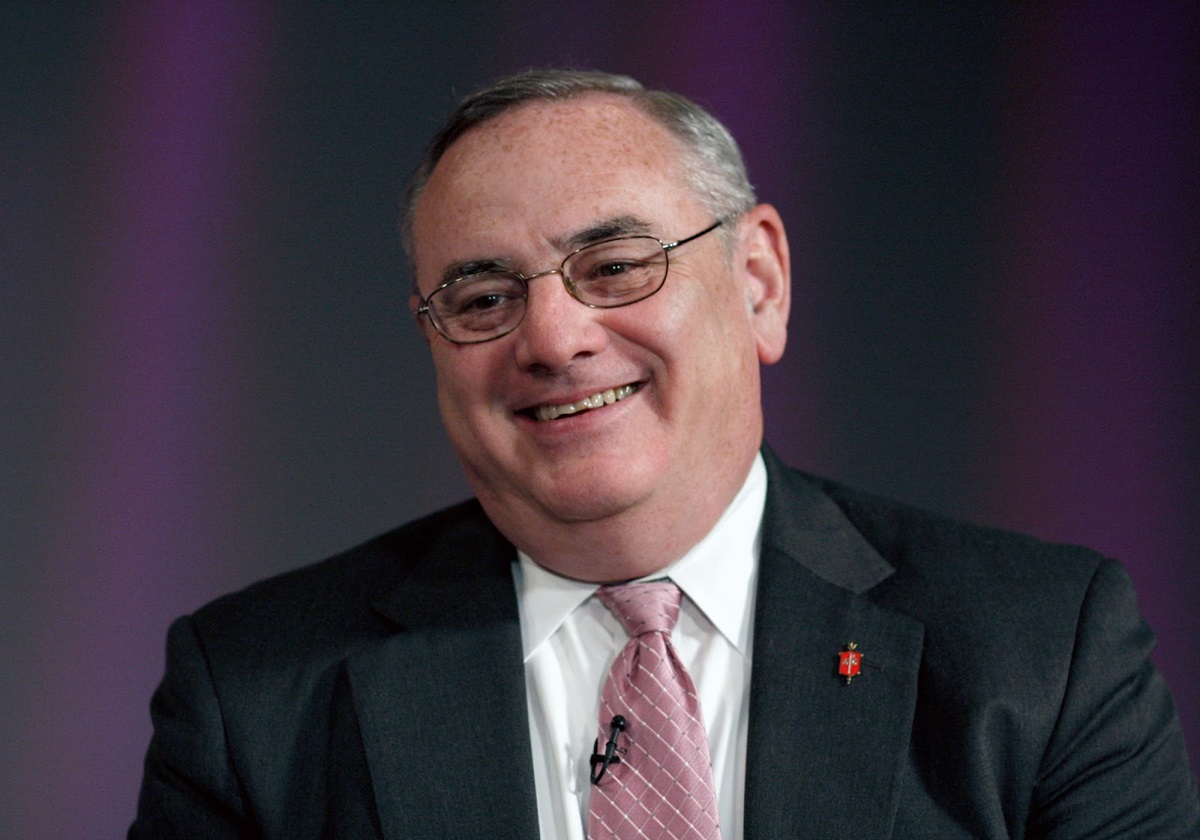
From the very beginning, the people who follow the theology and the dreams of John Wesley and Francis Asbury have had an uneasy relationship with bishops. One proposal before 2012 General Conference delegates recommends creating a “set-aside bishop” without residential responsibilities. Naturally, this has prompted comments for and against the idea.
Let me share some of our thoughts as we — the Council of Bishops — have studied, prayed, talked, discussed and debated in bringing forth a proposal for the president of the Council of Bishops to be relieved of residential responsibilities for a period of four years.
First, we all agree that the church’s most important task is mission. The bishops are committed to leading the church toward the mission of making disciples of Jesus Christ for the transformation of the world. How do we do that most effectively? We believe we do it through vital, healthy, thriving congregations connected first to God and then to one to another in the common mission field of a neighborhood, a community, an area, a country and the world.
The adaptive challenge that has emerged from the Call to Action and from our work over this quadrennium is to redirect the flow of attention, energy and resources toward increasing and sustaining the number of vital congregations. This should not surprise us since it is already in the Book of Discipline: “The local church provides the most significant arena through which disciple-making occurs. It is a community of true believers under the Lordship of Christ” (Par. 201). The bishops see the importance of providing leadership that encourages, inspires, motivates and challenges United Methodists to be about the mission of the church.
Second, the Discipline and our constitution say that bishops provide spiritual and temporal leadership for the whole church. However, for the most part, the paragraphs that describe the work of the bishop (Par. 401-435) describe a manager, not a spiritual/temporal leader, of the denomination. How do we do that? Your bishops have been engaged in continuous conversation and study on adaptive leadership, focusing on the work of Ronald Heifetz and others who write and teach about leadership in the 21st century.
We understand that the hierarchical world no longer exists, that command and control does not work. There are those who believe this might be a shift in the balance of power or too much authority invested in one office. However, we understand and are learning to practice a collaborative, transformative, adaptive leadership. The person would be held accountable by the Council itself and through both conference and jurisdictional committees on episcopacy.
‘Challenging the church’
The opportunity to provide a Council of Bishops president who is relieved of residential responsibilities is not about power, authority, hierarchy or command and control. It is about mission and vision. It is about challenging the church in every part of the world to move forward in accomplishing its mission.
Third, I am finishing two years as president of the Council of Bishops, while providing residential leadership for the Western North Carolina Annual (regional) Conference. It has become nearly impossible to be president of the council, dealing with demands, requests and assorted other matters, and to lead an annual conference at the same time. This flat world with instant communication continues to change and challenge the work of the president of the Council of Bishops. Working to keep up with all of those changes, plus serving in my primary assignment as a resident bishop, has meant investing more time and energy in both, with less time for rest and reflection.
As we currently operate, we expect and demand much of one person. As I have looked back on my two years in these dual roles, I realize there have been very few days off and shortened vacations. In order to do both assignments, the president must clock 12- to 14-hour days, and “smartphones” make us available 24/7 in all time zones of the world.
I have been most fortunate to have a retired bishop (Neil Irons) serving part time as an executive secretary and assisting the work of the council. He helps me and, especially, the council move through the paperwork and the many requests, reports and other things that require our attention. The small office space we have in the United Methodist Building in Washington provides a place for Bishop Irons and our full-time administrative assistant, Jo Ann McClain. Both are most efficient and helpful in supporting the president of the council.
In addition, the council elects a retired bishop to serve part time as our ecumenical officer. Over the years, we have had some strong leaders in that position. However, it sends a confusing message to the ecumenical community. Who is the head of the communion? Is it the council president? Is it the ecumenical officer? Is it the United Methodist Commission on Christian Unity and Interreligious Concerns? For the last four years, Bishop Sharon Rader has served as our ecumenical officer. She and I receive numerous invitations to represent The United Methodist Church, so we communicate often. In response to those invitations, she responds and participates as much as possible, and we communicate regularly about our shared work. We often share the participation, and often ask other bishops to represent us. Thus, there is neither consistency nor a clear message to the wider world and our ecumenical partners.
‘An already time-consuming job’
The requests and demands to travel, itinerate and speak on behalf of the Discipline, our identity as United Methodists, our Wesleyan heritage and our unique mission and ministry demand more time and energy than one can do in an already time-consuming job.
Finally, we believe that the president of the Council of Bishops will help lead the bishops in staying focused on the adaptive challenge. The bishops have said, “We want to expend our energy, resources and attention on developing, nurturing and increasing the number of vital congregations. We want to begin to organize the work of the Council of Bishops, to have conversations across the entire church. We understand what it is to work collaboratively and collegially, and that is the way a president without residential responsibilities would lead.”
Contrary to what some have speculated, it is not as if we would be the Council of Bishops or its president or any other group standing hierarchically over anyone else. Rather, having a set-aside bishop would offer a way to unite us so we could move forward toward the mission — encouraging spirituality and accountability among the bishops.
In my two years serving in this office, I have learned how little power, authority and permission the president actually has. There has not been a month that I have not received a letter from a conference somewhere in the world, wanting the president to intervene in some conflict or problem facing an area. Of course, the Discipline is very clear about the process, and it includes only those who are bishops in the region. What such requests do, however, is cause anxiety among the people and many prayers from me. Nothing in this proposal changes any of that, but it does open the door for the president of the council to keep everyone focused on the mission and to ensure that the processes outlined in the Discipline are carried out.
My sisters and brothers, it is all about the mission and how we connect and collaborate in moving the church forward. A president of the council without residential responsibilities begins to help us focus, sharpen, align, and move with passion for the sake of Jesus Christ.
*Goodpaster, president of the Council of Bishops, serves the Charlotte Area of The United Methodist Church.
Like what you're reading? Support the ministry of UM News! Your support ensures the latest denominational news, dynamic stories and informative articles will continue to connect our global community. Make a tax-deductible donation at ResourceUMC.org/GiveUMCom.


