
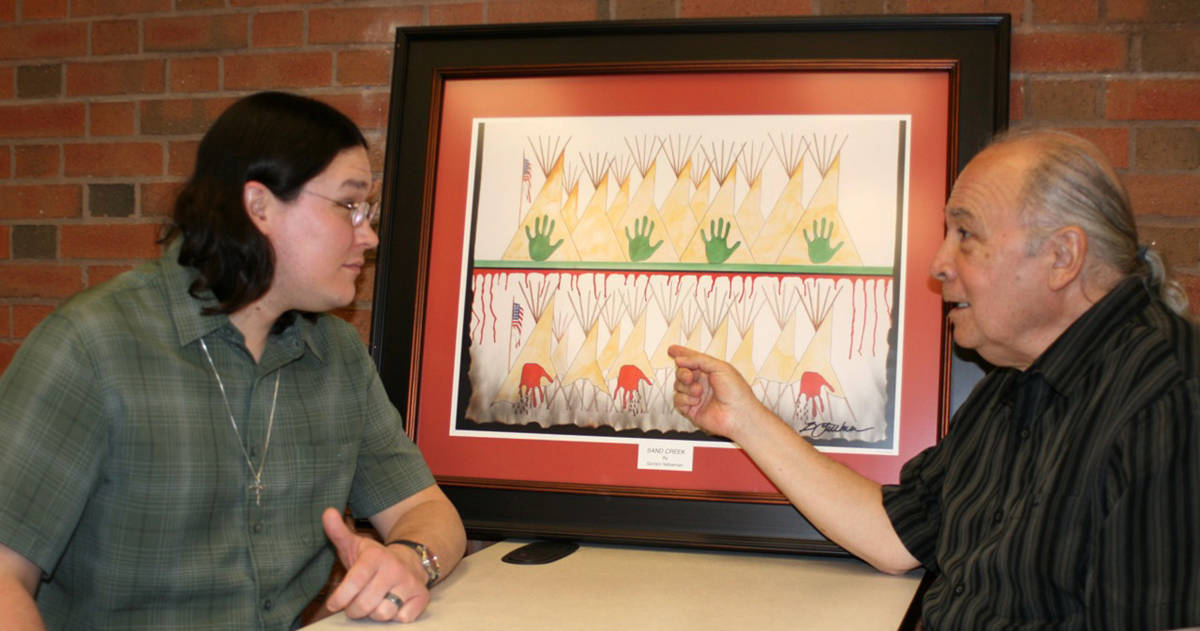
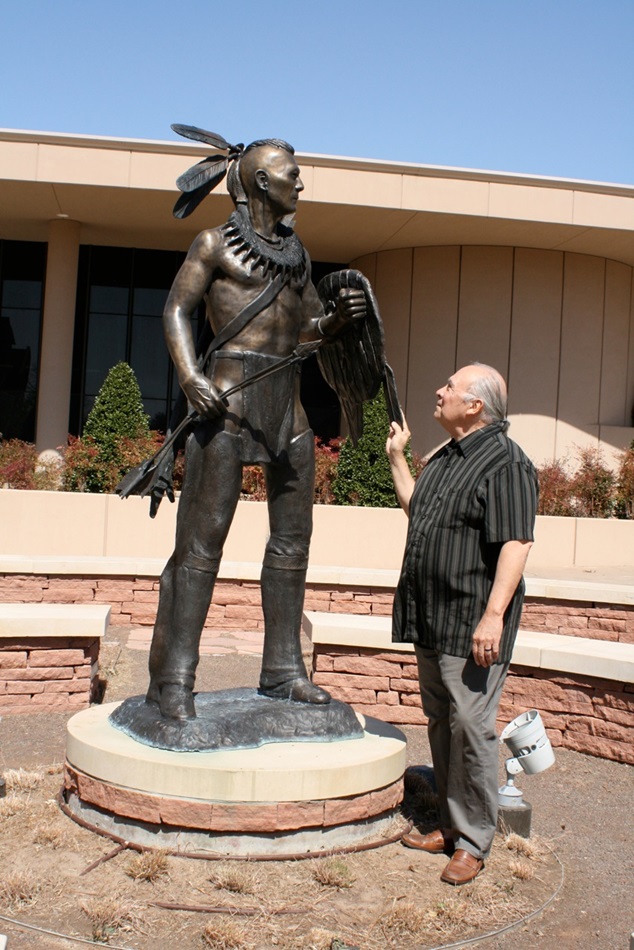
United Methodist-related Saint Paul School of Theology at Oklahoma City University is giving Native Americans new reasons to hope, according to a Native American leader in the church.
“Our Native American people across the UMC are asking for educational opportunities that will help us grow in our Christian faith,” explained the Rev. Anita Phillips, executive director of the denomination’s Native American Comprehensive Plan. “We want to develop Native American leaders, strengthen Native American churches. And we want to raise the visibility of Native Americans within the UMC and to have our voices heard.”
Phillips, a member of the Saint Paul Native American Advisory Board, said the school is aware of the comprehensive plan goals and committed to helping accomplish them.
“Our mission is to build a sustainable ministry that is relevant to Native American needs and concerns,” said the Rev. Elaine Robinson, Saint Paul’s academic dean at Oklahoma City University. “We are not only building for Native Americans; we (also) are building with Native Americans and for the benefit of all of us. We are not doing it on our own. We are together on a collaborative journey with the Oklahoman Indian Missionary Conference, Oklahoma City University and several other tremendous partners. And what we are doing together is working.”
Efforts to get in touch with Native American needs began in August 2009 with a dialogue event at Oklahoma City University. Several hundred Native American clergy and laity attended, along with faculty members and others from Saint Paul.
Keynote speaker for the event was the Rev. Thomas White Wolf Fassett, a former executive of the United Methodist Board of Church and Society and a longtime leader in Native American ministries.
Recommendations heeded
Participants gathered in small groups to express concerns and to make recommendations.
“One recommendation … called for placing a Native American professor on our faculty,” Robinson said. “Financial realities didn't permit Saint Paul to open a new position, so we submitted a grant to the Henry Luce Foundation requesting seed money for the position.” The foundation granted funds to hire a visiting professor in Native American ministries for July1, 2012, through July 1, 2014.
“We are now seeking additional funding,” she added, “and Saint Paul is committed to establishing a faculty position for a Native American scholar in perpetuity."
Read more
Learn about how one professor believes Native American culture can help inform solutions to the world’s pressing problems. Read more»
The Luce Foundation grant enabled Saint Paul to hire the Rt. Rev. Steven Charleston as visiting professor. A former bishop of the Episcopal Church in Alaska, he also was president of an Episcopal divinity school in Cambridge, Mass. Born in Oklahoma and a member of the Choctaw Nation, Charleston is a popular writer and speaker.
Robinson said only three or four seminaries in the United States have a Native American faculty member. One reason is the scarcity of Native Americans who have academic qualification for seminary teaching.
“United Methodist-related institutions, such as Oklahoma City University, are fulfilling the church’s core value of providing education and opportunities for all,” said Gerald D. Lord, an executive of the United Methodist Board of Higher Education and Ministry. “The Native American community has made great contributions to the life of the church, and there is still much more to share with all of us. It’s important that the church continues to provide these opportunities throughout our United Methodist education connection.”
Mentoring future generations
To help meet the need for Native American scholars, Saint Paul developed a mentoring event for Native Americans who have the aptitude and desire to pursue doctoral studies in a theological discipline.
Saint Paul received a grant from the United Methodist Commission on Religion and Race that will enable the seminary to hold the event in August 2014. “We hope to help double the number of Native Americans with doctorates in theological education,” Robinson said, “so they can help mentor future generations of Native American theological scholars."
Now under way at Saint Paul is a Native American scholar’s project aimed at producing a Native American Christian theology book. Native American scholars are writing chapters. Anticipated publication date is 2015, Robinson said.
Charleston said Saint Paul is taking Native American thought seriously and attempting to open new doors and new leadership that can bring valuable lessons to the life of the church and all spiritual people.
“What's happening at Saint Paul,” Charleston concluded, “is also lifting up Native American core values that our world needs to take seriously.
United Methodists will celebrate Native American Ministries Sunday on May 4. The special churchwide offering supports scholarships for Native Americans attending United Methodist seminaries, urban ministries with Native Americans and annual conference Native American programs.
*Bowdon, former communications director for the Oklahoma Annual (regional) Conference, is a freelance writer.
Like what you're reading? Support the ministry of UM News! Your support ensures the latest denominational news, dynamic stories and informative articles will continue to connect our global community. Make a tax-deductible donation at ResourceUMC.org/GiveUMCom.


