

Key points
- The Rev. Lovett H. Weems Jr., a respected scholar of United Methodist leadership, has published “An Aura of Hope.”
- The book offers a roadmap for renewal after a season of church disaffiliations.
- To grow again, he emphasizes, United Methodists will need to reach “the people God gave us.”
This Pride Month, many United Methodists celebrate the two years since the denomination removed longtime bans on gay clergy and same-sex marriage.
While he cheers The United Methodist Church’s more grace-filled stance toward LGBTQ people, the Rev. Lovett H. Weems Jr. urges his fellow church members to temper their pride with a healthy dose of humility.
“With all our rich heritage and theological understanding,” he writes, “we were not capable of affirming the rights of those of varying sexual orientations in a way that did not divide the church and lose 25 percent of the congregations.”
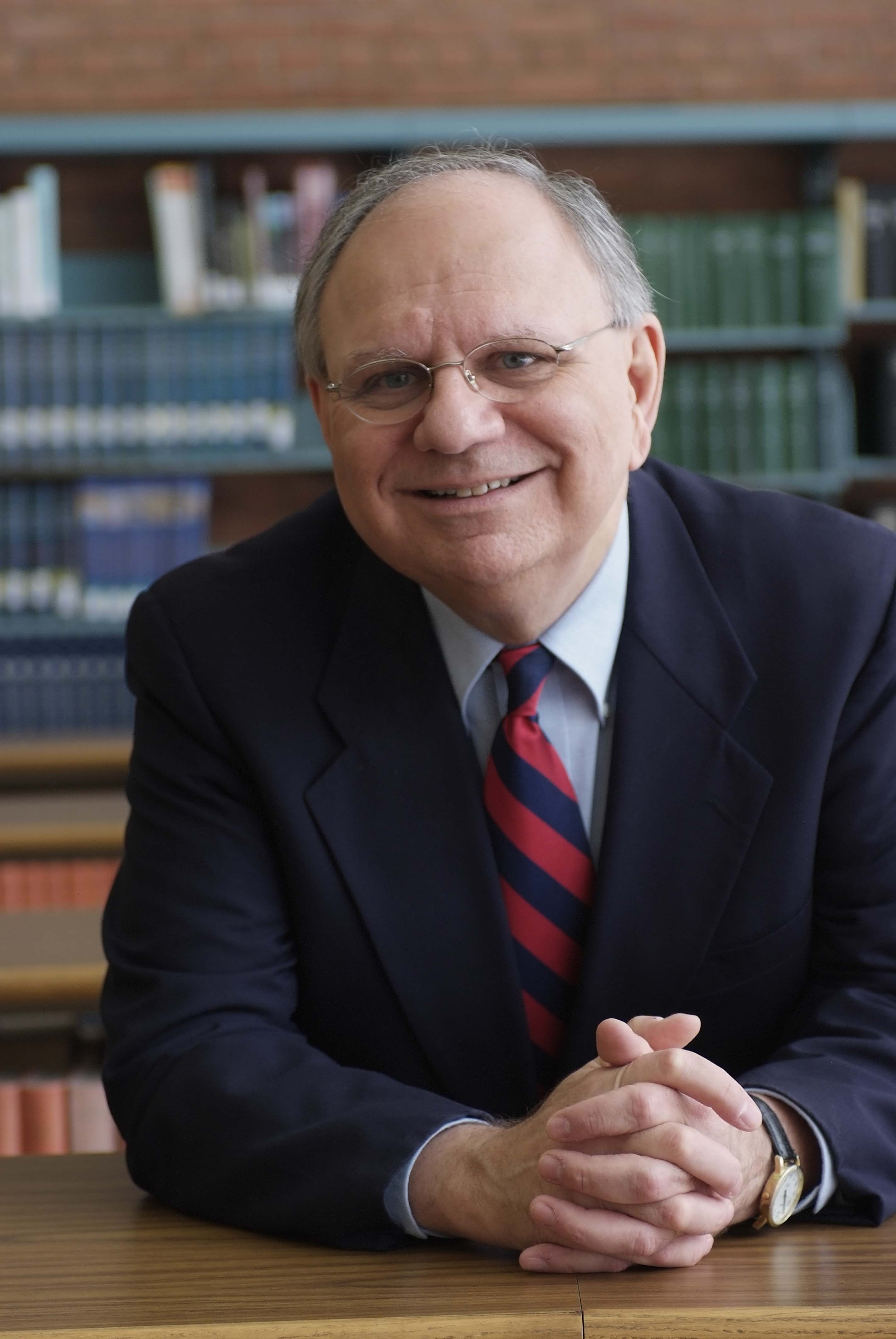
Photo courtesy of Wesley Theological Seminary.
As founding director and now senior consultant with the Lewis Center for Church Leadership at Wesley Theological Seminary in Washington, D.C., Weems kept track as the denomination saw more than 7,600 congregations — about a quarter of its U.S. churches — head for the exits. A policy that lasted from 2019 to 2023, before the denomination eliminated the bans, offered a pathway for U.S. churches to leave with property for “reasons of conscience” related to homosexuality.
Now, Weems has a post-mortem and a look at what comes next. Abingdon Press, an imprint of the United Methodist Publishing House, has released Weems’ book — “An Aura of Hope: United Methodism’s Next Chapter in the United States” — as well as accompanying resources.
Weems knows keenly the pain of The United Methodist Church’s fracturing. The rural Mississippi congregation where he grew up and that helped shape him as a Christian is among the churches that disaffiliated. One day, he expects to return — not to the church building, but to the cemetery where he will be buried beside his parents who, he writes, “fortunately, never had to learn what their church had done.”
Nevertheless, as a longtime United Methodist leader with faith in Christ’s resurrection, Weems holds onto the promise that loss and death do not have the last word.
His book offers both a clear-eyed view of the state of the denomination today and his advice for how U.S. United Methodist churches can reach “the people God has given us” and grow again.
UM News spoke with Weems about his new book. Here is the interview, edited for clarity and length.
Your book is forthright that The United Methodist Church in the U.S. had seen decline long before disaffiliations. In fact, you note that 1965 was the last year of membership growth in the U.S. for the denominations that formed The United Methodist Church in 1968. What changed?
Well, it’s been said that the most dangerous time for any organization is when success comes. That can really be seen in the history of American Methodism. Back in the 1800s, Methodism grew much faster than the rate of growth of the population. By the end of the 1800s, Methodism was continuing to grow, but it was much more modest growth. That continued into the 20th century, and so the Methodist Church continued to be the largest Protestant denomination in the country, and it continued to grow.
After World War II, there was a surge not only in Methodism, but across all denominations. There was actually a revival of interest in religion, but also that was the era of the largest population cohort in history being born, the Baby Boomers, the first born in 1946 and the last born in 1964, which was also the year that the first of the Baby Boomers finished high school.
Learn more
Cokesbury, the United Methodist Publishing House’s online store, is selling “An Aura of Hope” in both paperback and e-book form.
Other recent releases from the Publishing House include:
· “Calling on Fire: Reclaiming the Method of Methodism” by Ashley Boggan and the Rev. Chris Heckert.
· “God and the Machine: Navigating the Age of AI” by the Rev. Nathan Webb.
· “No Religion but Social Religion: Liberating Wesleyan Theology” by Joerg Rieger with contributions by Paulo Ayres Mattos, Helmut Renders, and José Carlos de Souza.
Now, the Immigration Act of 1965 changed the makeup of the country, as much as anything else did, because it opened up immigration to parts of the world that had been excluded primarily for racial reasons. When that bill passed in ’65, the population of the country was 84% white, 16% people of color, primarily African American, and today over 40% of the population comprises people of color. The United Methodist Church and other mainline Protestant denominations typically have no more than 10% people of color. So, in a sense, it was an era when the nation changed and the church didn’t.
The population also became more concentrated. When Methodism was perhaps at its peak as a percentage of the population in the 1920s and 1930s, 80% of the people lived in rural areas. Today, only about 20% do. … The nation was changing in other ways. As the church got older, the nation was getting younger. So, success often leads you to continue the practices that brought you success even when the context has changed.
So, today how do you reach the people that God has given us now that that context has changed and we have so many people who are religiously unaffiliated?
I think the way we reach the people God has given us … has to do with our perspective. When churches and their leaders view their ministry, they begin by thinking of their members and the ministries they have and the opportunities that are available. That’s a very different approach from viewing our community as our parish, and viewing it then as God views it, or as, yes, (Methodism founder) John Wesley tended to view it.
John Wesley always began with the people. He didn’t begin with clergy. He didn’t begin with churches. He didn’t even begin with doctrine because he contended that you don’t know what doctrine is relevant until you know the people, their concerns, their situations, their hurts. That’s why Wesley often would preach five times on a Sunday, and sometimes he would preach five different sermons — not because his beliefs were changing, but because the people to whom he was preaching were changing.
So, if you’re going to begin with the people and their needs, you have to know who they are. … We have churches today with no children where there’s a grade school within sight. Church leaders and members should be thinking about how much time during a week they spend doing those things that will connect them with the people God has given them — the people they have not previously had any connection with.
You suggest that churches should prioritize increasing professions of faith. What does this mean in less churchy language?
You do not have to use language from the statistical tables. What I’m talking about are new adherents, new believers, people who are saying, ‘Yes, I want to begin my journey of faith in Christ.’ … I am choosing professions of faith because: 1.) It is central to the mission of the church, and 2.) If you look at where professions of faith have gone up or down, you see a ripple effect on so many other things.
If you were a pastor again, how would you go about increasing professions of faith?
Subscribe to our
e-newsletter
I think I would want to say: Our church exists to help you take your next faithful step on your discipleship journey with Christ. For some of you, that will be lifting your hand to say, ‘Yes, I want to begin this journey.’ For most of you, it will be taking another step in your spiritual pilgrimage as you seek to grow in grace. And your church exists to offer you opportunities that you’re able to utilize to help that growth and to provide you, as a group, the opportunity not only to share your faith with others, but also to meet the needs of others in our community and beyond.
People should never get the idea that they exist to do something for the church. The church exists to help them on their spiritual journeys.
You’ve titled your book “An Aura of Hope.” Where do you see hope for the post-disaffiliation church?
I see it primarily in the spirit of people who stay. … It’s not that those who stayed all are in agreement — whether it’s on human sexuality or other things. But it’s that they have said ‘Yes’ when others said ‘No.’ They were never under any illusions that everybody in their congregation or their denomination agreed with them on everything. The battles we’ve been having on human sexuality since 1972 were never their battles in the same way that it was for those who were determined not to live in a denomination where God revealed God’s wisdom to some people differently than to them.
Hahn is assistant news editor for UM News. Contact her at (615) 742-5470 or [email protected]. To read more United Methodist news, subscribe to the free UM News Digest.


