

Key Points:
- Widely admired United Methodist historian the Rev. Russell E. Richey is being remembered for his influential books and articles and mentoring of hundreds of students.
- Richey taught at Drew, Emory and Duke universities and served as dean at Candler School of Theology.
- He died Jan. 19 at his home in Durham, North Carolina, at age 83.
The Rev. Russell E. Richey, a teacher and historian who changed the way United Methodists tell their story, died Jan. 19 at his home in Durham, North Carolina. He was 83.
Richey had been in hospice care, suffering from lymphoma and heart issues, said his wife, Merle Richey.
“He was aware of all things Methodist from the beginning of the church in this country to now, including the hymnody,” Merle Richey said.
The Rev. Richey wrote or co-wrote many United Methodist history books and articles on denominationalism, civil religion and American Methodism. He was the co-founder of the online journal “Methodist Review” and mentor to hundreds of students at Drew, Emory and Duke universities.
“He’s one of the historians who’s tried to crack open the Methodist history,” said Ted Campbell, who teaches Wesley Studies at Perkins School of Theology at Southern Methodist University. He is the other founder of “Methodist Review.”
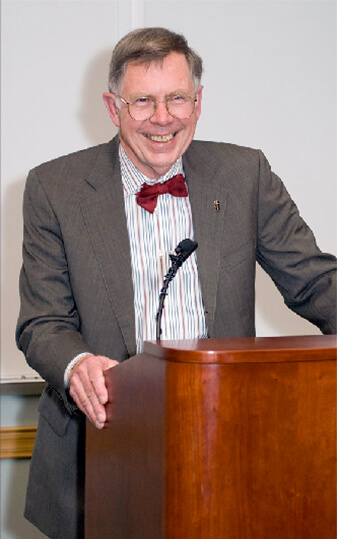
The Rev. Russell E. Richey was Dean Emeritus; William R. Cannon Distinguished Professor Emeritus of Church History at Candler School of Theology at Emory University. Richey died Jan. 19. Photo courtesy of the Richey family.
Before Richey, histories of Methodism focused on General Conferences, denominational divisions, “astonishingly boring stuff like that,” Campbell said.
“Non-Methodist scholars were … interested in the Methodist roots of holiness and Pentecostalism, which is something that mainstream Methodists deeply wanted to deny,” he said. “Russ wanted to talk about the screaming and shouting, the experiences of entire sanctification and people falling down unconscious and stuff like that,” Campbell said.
Also, Russell stressed slavery as the original sin of Methodism, Campbell said.
“He said that’s what really killed conferences as live revival events was when they came to be so dominated by issues about enslavement, they really ceased to be appealing as a place where communities came together. ... That’s what the histories had been missing.”
Richey, an ordained elder in The United Methodist Church, was born Oct. 19, 1941, in Asheville, North Carolina. He graduated from Wesleyan University in 1963, and earned advanced degrees at Princeton University and Union Theological Seminary. He was dean of Emory University’s Candler School of Theology from 2000 to 2006 and then returned to the faculty to teach until his retirement in 2012.
“He had a friend named David Gergen,” Campbell said. “I don’t know if it was high school or college, but they snuck into a Ku Klux Klan meeting with a tape recorder, and recorded what was going on. They could have got … shot, but he loved to tell that story, and he and Gergen remained friends for years." Gergen went on to become a national political commentator and adviser to (presidents) Richard Nixon, Gerald Ford, Ronald Reagan and Bill Clinton.
Richey was an encouraging and avuncular presence in teaching and research circles, friends and students said.
“In academia, which can often be a cold and competitive place, Russ was exactly the opposite,” said Priscilla Pope-Levison, Research Professor of Practical Theology at Perkins. “He wanted anyone doing anything in Wesleyan studies to thrive. It wasn’t a competition.”
Ashley Boggan, top executive at the United Methodist Commission on Archives and History, said Richey “was one of the kindest, most gracious and humble scholars” she had ever met.
Richey collaborated with Boggan, Kenneth E. Rowe and Jean Miller Schmidt on the revised and updated “American Methodism: A Compact History,” published in 2022. It is a required text in many Methodist studies courses.
“His amount of scholarship, depth of knowledge and love of Methodist history is almost insurmountable,” Boggan said. “I fell in love with Methodist history because of a Russ Richey book, and I was so honored to get the privilege of working alongside him in recent years. He will truly be missed, but he will live on through the joy of his written words.”
Among Richey’s other books:
- “A Church’s Broken Heart: Mason-Dixon Methodism,” about racism and slavery in the church;
- “Methodism in the American Forest,” about Methodist camp meetings during the 19th century;
- “The Methodist Experience in America, Volumes 1 and 2,” which chart the growth and development of the Methodist and Evangelical United Brethren church family through the year 2000.
Richey published more than 20 books as author or editor and more than 60 journal or reference articles.
“From his perspective, it is the responsibility of the church historian not only to mine the raw material through research and follow where the evidence leads,” wrote the Rev. William B. Lawrence, also a Methodist historian, in a tribute published in a 2012 festschrift in Richey’s honor. “Diaries, minutes, hymns, letters, sermons, liturgies, prayers, even some ephemera such as broadsides reveal the church engaged in its work.
“Russell Richey is not the only historian to take such matters seriously. But he is at least one historian to take such matters seriously … while remaining committed to — and in love with — the church.”
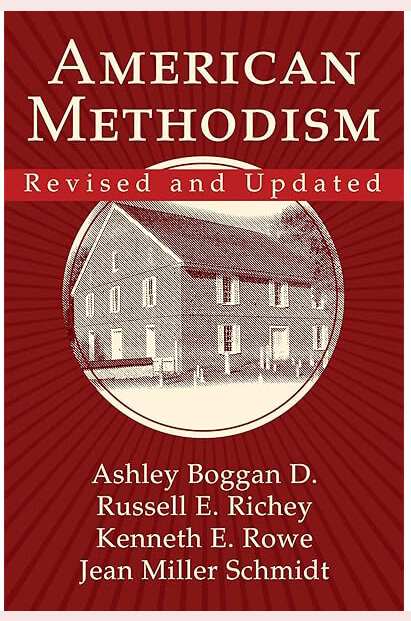
“American Methodism: A Compact History” was revised and updated by the Rev. Russell E. Richey, Ashley Boggan, Kenneth E. Rowe and Jean Miller Schmidt; it published in 2022. Image courtesy of Abingdon Press.
Outside of work, Richey enjoyed tennis and classical music on WCPE, Merle Richey said. “He also loved bluegrass, country music and especially old-timey hymns,” she said.
As a father, he was not inclined to tell his children what to do, said William Richey, Russell Richey’s son.
“He suggested things to me, and listened to me,” Will Richey said.
In addition to his wife and son, Russell Richey is survived by daughter Elizabeth Thompson, son-in-law Bennett Thompson, daughter-in-law Jennifer Richey, two brothers and four grandchildren.
“A large number of people knew that he was (home) on hospice,” Merle Richey said. “There was a huge outpouring of notes and emails and visits and calls to him, which he appreciated, and beautiful sentiments from former students and colleagues about how they had appreciated his work and his attention to them, personally — very beautiful, really.”
Merle and Russell Richey worshipped at Trinity United Methodist Church in Durham.
“In general, he was a pretty serious guy, but his sense of humor would surface at times,” Merle Richey said.
Campbell offered an example:
“Russ knew me appropriately as a doctrinal conservative,” Campbell said.
When Campbell came to preach at Duke University, where Richey was teaching at the time, Campbell “said some progressive things,” surprising his friend.
Subscribe to our
e-newsletter
“I got this letter under my door, formal, in a Duke envelope marked ‘Confidential.’ The letter said, ‘Due to your sermon today, the Duke Divinity School Liberal Society, a very secret society, has nominated you for membership.’
“That was Russ all the way. He was a fun guy.”
Funeral services were private; a public tribute may follow.
In lieu of flowers, memorial contributions may be made to the Russell E. Richey and Merle Umstead Richey Visiting Professorship in Methodist and Wesleyan Studies Endowment at Candler School of Theology at Emory University, Fund 06088802, Attention: Lisa R. Smith, 1762 Clifton Road, Suite 2400, Atlanta, GA, 30322.
Patterson is a UM News reporter in Nashville, Tennessee. Contact him at 615-742-5470 or [email protected]. To read more United Methodist news, to the free Digests.


