
Key points:
- Pope Leo XIV’s recent letter reflects traditional Catholic moral thought, but it also has strong similarities with abolitionist values in 19th century America.
- Thinkers such as Theodore Weld, Samuel Taylor Coleridge and the Rev. Dr. Martin Luther King Jr. held that each person should be treated as an end and not as a means.
- The United Methodist Church has an opportunity to shine by focusing on the principle of valuing people for who they are — a focus that can lead to revival and growth.
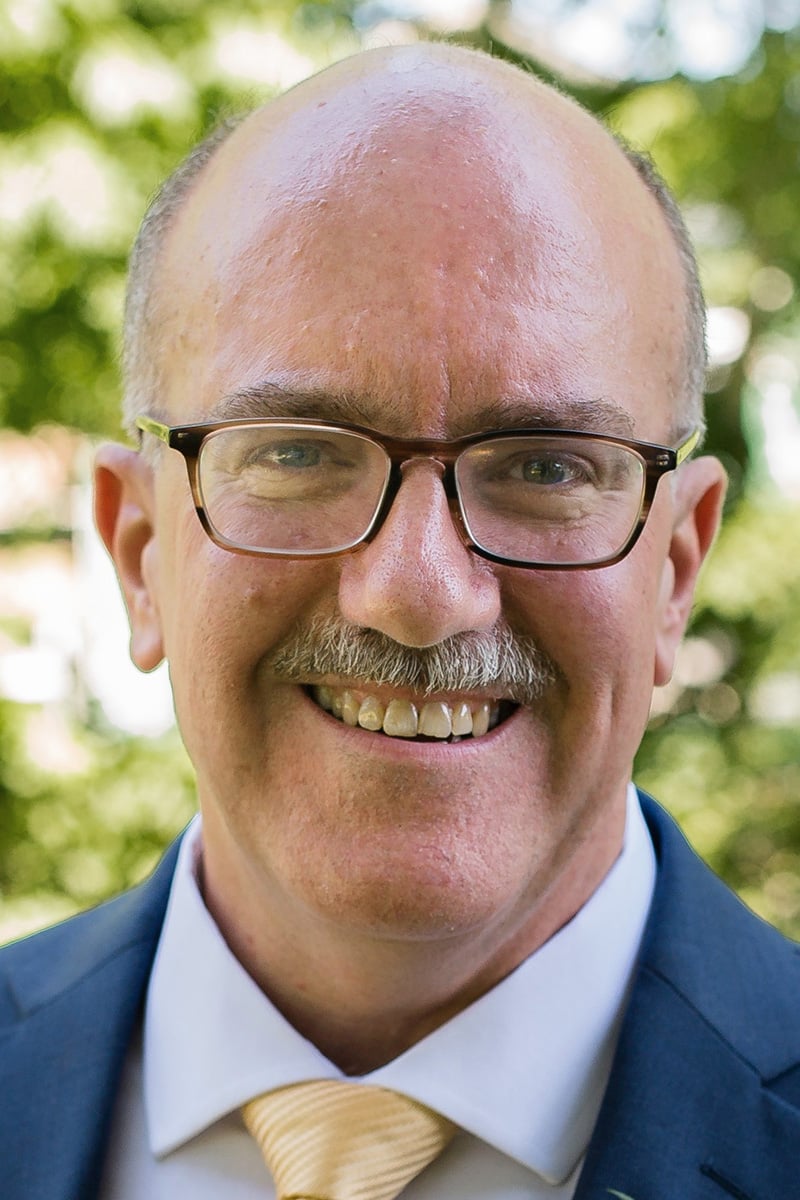
Photo by Kristen Schell.
Commentaries
Pope Leo XIV’s recent encyclical letter, “Magnifica Humanitas,” has been described by the secular press as a statement regarding artificial intelligence. That’s only partially true — and rather superficially so.
“Magnifica Humanitas” is, as its name states, about the wonderful dignity of humanity. This is not a new emphasis for Catholic social teaching, though the document addresses — as most encyclicals have — emerging threats to human dignity.
The pope names several of these threats, but perhaps one stands out from the rest. He writes: “Among these ideologies, I consider particularly insidious the one that suggests that every person must earn or justify his or her own worth, to the point of attributing greater value to those who are more efficient or effective. From this perspective, persons end up being reduced to a means of achieving results, a resource to be used and exploited, and are no longer recognized as a proper end in themselves who should never be instrumentalized.”
This is traditional Catholic moral thought, but few recognize the similarities between this teaching and the abolitionist movement in America.
For more than 30 years I have researched, written and spoken about human rights and the fight against slavery that took place in the United States between 1830 and 1865. Much of this scholarship has relied on John Wesley’s opposition to slavery. His 1774 tract, “Thoughts Upon Slavery,” is a blistering attack on dehumanizing injustice.
As the 19th century opened in America, several from a variety of Christian traditions embraced the cause. One such prophet was a fiery orator from Connecticut named Theodore Weld (1803-1895). Weld came out for immediate abolition in the early 1830s and led many of the nation’s premier abolitionist groups before 1840.
In 1835, he drafted the Declaration of Sentiments of the Ohio Anti-Slavery Society. This three-page statement outlined first principles for the movement, and the document began by explaining why slavery is a sin: “it converts persons into things” and “holds and uses men [sic], as mere means for the accomplishment of ends, of which ends their own interests are not a part.”
This clumsy turn of phrase drove Weld’s witness — almost 200 years before “Magnifica Humanitas” underscored that people should always be treated as ends in themselves. In 1837, Weld wrote a lengthy and legendary tract observing that, for the enslaved, the profit of abusers “is made the END of his being, and he, a mere means to that end.”
The ethical principle that parses the nature of means and ends came to America from German philosophers of the late 18th century. In England, this language was raised to a moral axiom by the poet and writer Samuel Taylor Coleridge (1772-1834). Coleridge famously taught that a person treated as a thing becomes “one who may rightfully be employed or used, as a means to an end, against his will, and without regard to his interest.” It’s not hard to see how this analysis inspired abolitionist action before the Civil War.
During the Civil Rights Movement, the Rev. Dr. Martin Luther King Jr. made this distinction a hallmark of his commitment to justice. For instance, during worship in 1962 at Atlanta’s Ebenezer Baptist Church, King thundered, “The great philosopher Immanuel Kant said, in what he called his categorical imperative, that ‘every man [sic] should so live that he treats every other man [sic] as an end and never as a means.’” That’s right. King deployed such reasoning in a Sunday sermon.
I believe this fundamental conviction remains vital for today’s defense of human rights.
The United Methodist Church is beset by many challenges, and we have struggled to find our equilibrium since at least the late 1980s. Organizations with identity crises cast about for fixes that promise “results,” but they seldom acknowledge the way results-obsessed thinking accelerates the downward spiral.
Subscribe to our
e-newsletter
I served as a college chaplain and part-time professor for almost 25 years. This appointment was not about running a glorified youth group. It was an intellectually grounded ministry within higher education, and my scholarship mined the genius of those who stood for the unconditional value of people over the years.
When the denomination demanded that our chaplaincy count everything we were doing to prove “effectiveness,” we kept moving with an emphasis on the unqualified worth of people. And a lot of people participated in our movement — students, faculty and more. They participated because they were treated as ends in themselves — valued and encouraged, regardless of categorizations or bureaucratic games around numbers and budgets. In some ways, we had a roaring good time of love and justice despite the denomination.
There is a wave of positive energy throughout United Methodism in this season. Instead of fending off decline, we have an opportunity to define our core principles going forward. Let’s not miss this opening. Secular “wisdom” only values that which can be measured, typecast and leveraged for power. Now is our time to shine with the unique principle that values people — each person and all people — regardless of performance, worldly success and celebrity. I consider it a delicious irony that this unconditional regard for others can lead to true revival and an abundance of authentic growth. I see a genuine revival on the horizon.
I’ll work with Pope Leo any day of the year and stand for the world-changing, world-challenging truth that people are ends in themselves. And I’ll translate that truth into the practices of our Wesleyan tradition. It’s not the whole gospel, but it’s a very, very good place to start.
Momany is an historian and writer serving as pastor of First United Methodist Church in Dowagiac, Michigan. His most recent books are “Compelling Lives: Five Methodist Abolitionists and the Ideas That Inspired Them” (Cascade, 2023) and the collaborative “Awakening to Justice: Faithful Voices from the Abolitionist Past” (InterVarsity, 2024). He is an editor of and contributor to the forthcoming book “Sanctified Justice: The Theological Legacy of Holiness Abolitionism” (Cascade) and is working on a history of the philosophical principles that grounded the American abolitionist movement, “Beloved Community and the Realm of Ends: An Abolitionist Vision for America.”
News media contact: Julie Dwyer at (615) 742-5470 or [email protected]. To read more United Methodist news, subscribe to the free UM News Digest.


