
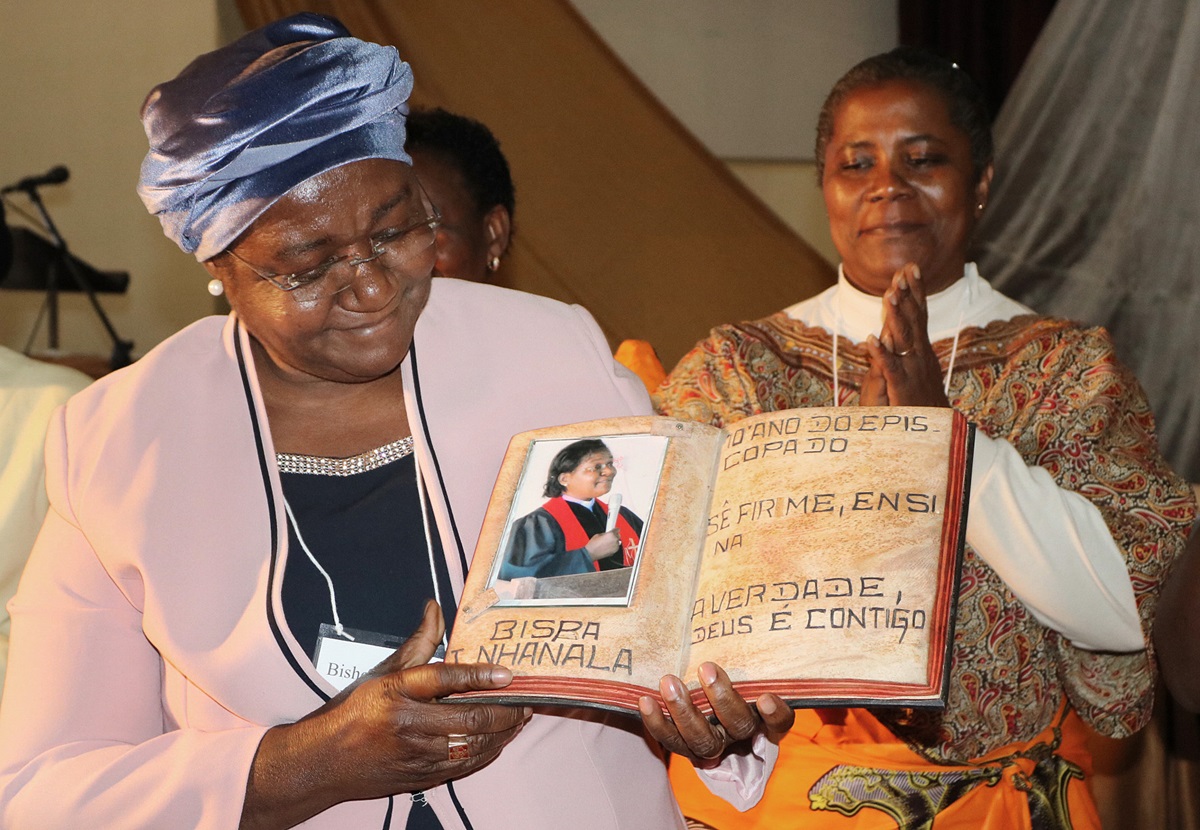
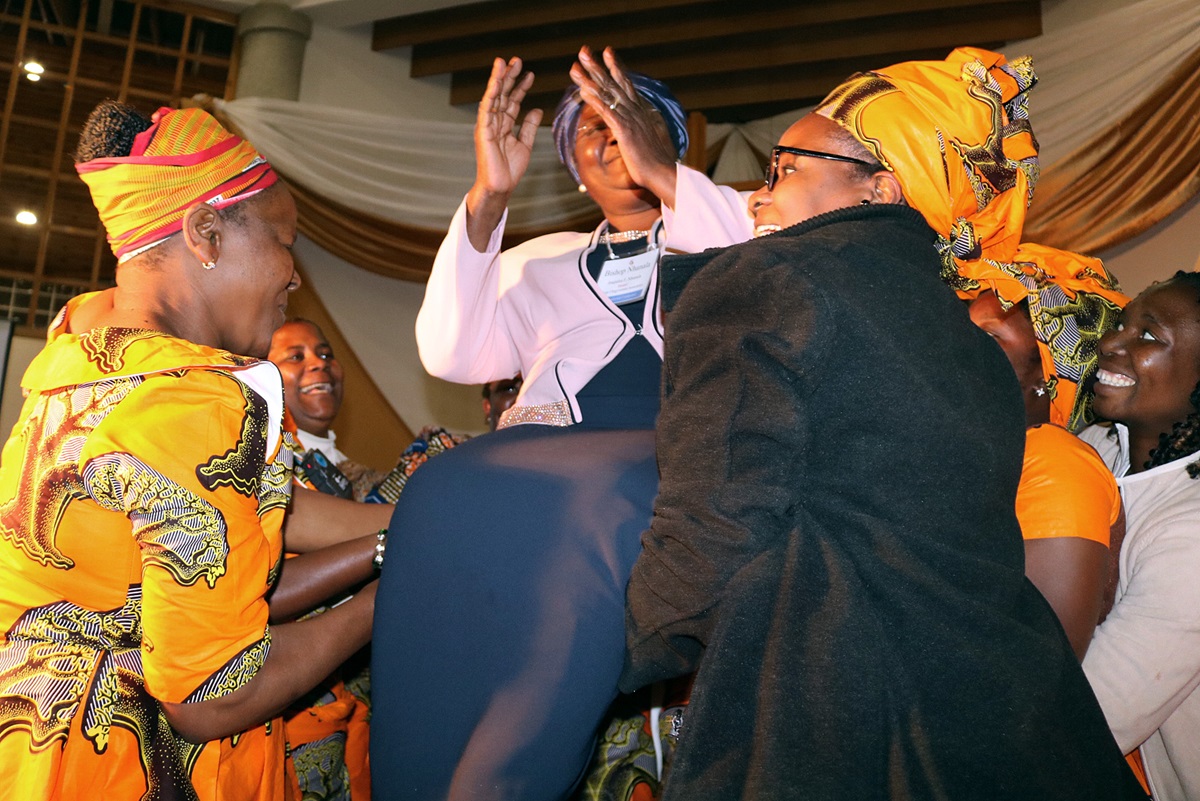
Her College of African Bishops colleagues call her “The Queen of Africa” or simply “Our Queen.” Bishop Joaquina F. Nhanala, 62, is a formidable woman.
The first and only female United Methodist bishop on the African continent has traveled a long and lonely road over the past decade and it is her prayer that “more women are elected into episcopacy in 2020.”
Nhanala sat down with United Methodist News Service before the African United Methodist Clergywomen Leadership Development Conference this summer to talk about her journey, the challenges she’s faced and her greatest achievements in her first decade as leader of the Mozambique Episcopal Area. The conference, funded by the Central Conference Theological Education Fund, was organized by the Association of African Clergywomen leadership, Bishop Nhanala and the United Methodist Board of Higher Education and Ministry.
Q: How was your journey into episcopacy, and how did you feel?
A: The idea to run for office did not come from me. When Bishop (João Somane) Machado was retiring, a group of people approached me and asked if I could run for episcopacy. Then other voices started coming and the fire spread like that.
The more I thought about it, the more I realized it was a huge responsibility. Mozambique is an episcopal area with three conferences and it is really big geographically, with churches far from each other.
At the time, I was working with World Relief, a non-governmental organization dealing with HIV/AIDS and youths, and I came to know most of my peers through my work. This interaction may have influenced my colleagues to encourage me to stand in the episcopal elections.
Q: How did your family view the idea?
A: My family was concerned at the huge responsibility. I trusted that I could do it, but nevertheless, it was a huge responsibility. I was just a pastor, and had never been a district superintendent. There were people who had everything it took to be a bishop. I had never been to General Conference — the first time I attended was after I was elected bishop.
Q: What major challenges have you faced over the past 10 years that you have been in office?
A: As a female pastor, or bishop, not everyone believes you are capable. Some people do not believe in female leadership. It is a challenge to work in such an environment. The general work environment is not bad, but there are still some individuals who do not believe in me.
Q: What have been the major achievements of your decade in office?
A: We have done much work in the community. With assistance from our partners in Missouri, we have managed to provide clean water to communities, and this has helped reduce cases of waterborne diseases. (The Mozambique Initiative is a 20-year partnership with the Missouri Conference.)
The church is now very visible in the communities. We have been actively involved in malaria prevention and promotion of good maternal health practices. Women are encouraged to attend antenatal clinics to reduce maternal mortality and we have empowered the laity by providing training.
We opened the United Methodist University in Cambine last year and the institution has established a partnership with Africa University.
Three primary schools have been built over the past 10 years in remote areas where we realized there was a high number of girls not attending school due to the long distances they had to travel to the nearest school. We plan to build more classrooms so the pupils can access secondary education at the new schools.
We have also made progress in improving sustainability of the church. We used to depend a lot on partners but we are exploring ways of becoming financially self-sustaining.
Q: Is Africa ready for its second female bishop?
A: I strongly believe Africa is ready. The question we should be asking is whether the system of the church is ready to allow more women to enter into episcopacy.
Q: Do you have any message for clergywomen aspiring to become bishops?
A: Listen to what God is saying. There is no school for episcopacy. You just come into office trusting God. Do not fear.
Let’s go for it. It is time. Do not resist; just follow God’s call. He is faithful. I applaud those who feel called to serve. It is a good thing to aspire for higher office.
Q: What is your relationship with the other bishops on the continent?
A: I am blessed, they call me “The Queen of Africa” or “Our Queen” and they are very gracious. We are on the same level and we are very mature. I have not yet felt any discrimination.
There is no doubt we take decisions differently, but we are all on a journey of leading God’s people. The male bishops are not intimidating but it is important that we have more women on the team.
Chikwanah is a communicator of the Zimbabwe East Conference. News media contact: Vicki Brown at (615) 742-5470 or newsdesk@umnews.org. To read more United Methodist news, subscribe to the free Daily or Weekly Digests.
Like what you're reading? Support the ministry of UM News! Your support ensures the latest denominational news, dynamic stories and informative articles will continue to connect our global community. Make a tax-deductible donation at ResourceUMC.org/GiveUMCom.


