
The road to hell may or may not be paved with good intentions, but the road to ineffective mission work certainly is.
That unsentimental message came through at Beyond These Walls, a conference on best practices in mission held April 26-28 at Houston’s Chapelwood United Methodist Church.
Speaker after speaker testified to how local churches mean well but often fail to do well in service, sometimes even causing harm.
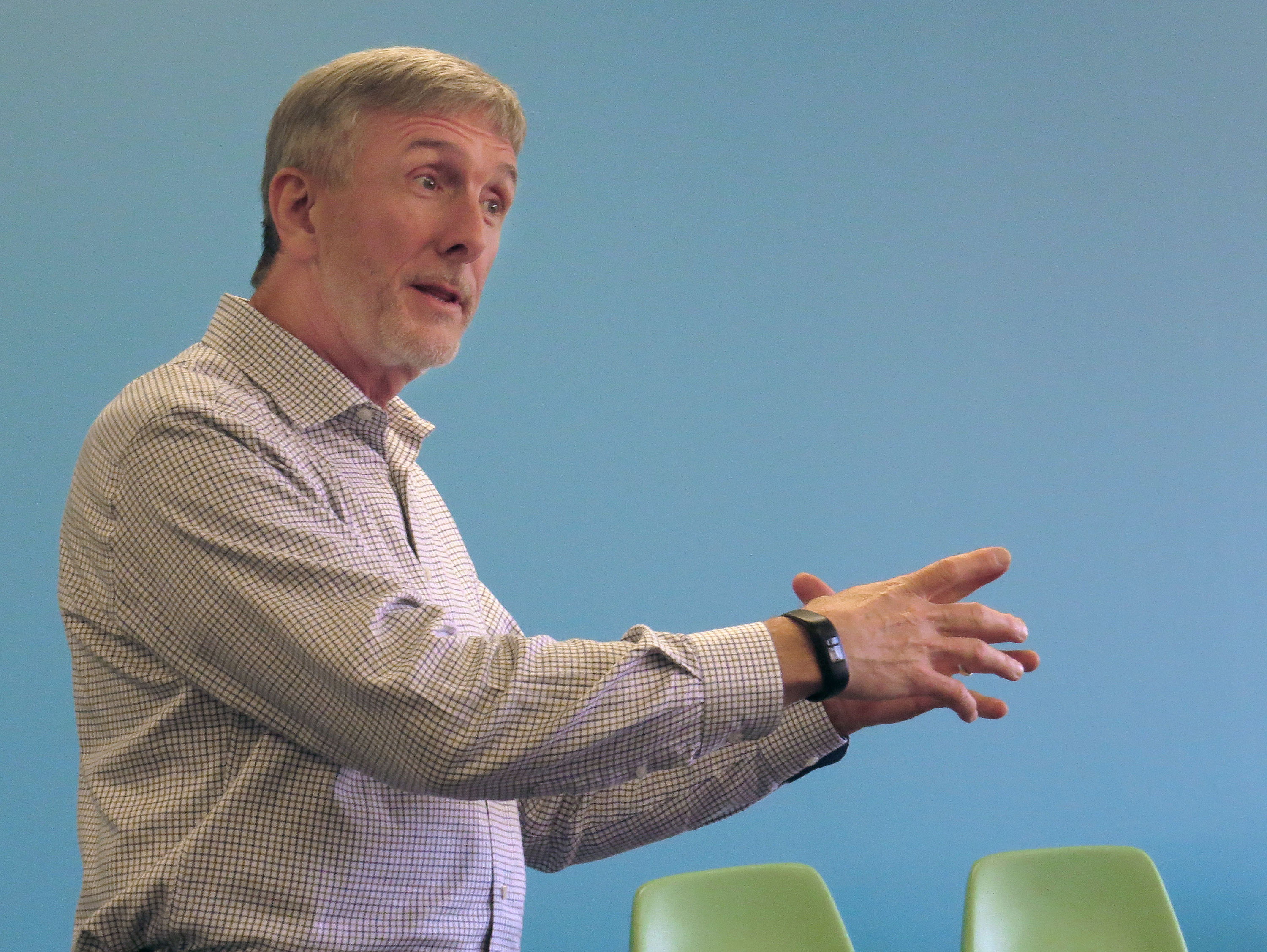
Jonathan Bell speaks on United Methodist microfinance efforts at the Beyond These Walls mission conference. Photo by Sam Hodges, UMNS.
One positive development: Many United Methodist churches have absorbed the message of such books as “Toxic Charity” and “When Helping Hurts,” and know they need to reach out differently.
“I see a far greater realization of the limitations of the traditional approaches to mission,” said Jonathan Bell, a longtime mission leader at the United Methodist Church of the Resurrection in Leawood, Kansas. “Churches are really wanting to move from doing good things to solving real problems.”
Converts to that way of thinking include the Rev. Clay Horton. In Houston, he attended a workshop Bell led on United Methodist efforts to combat poverty through microfinance loans.
“Our congregation has a desire to make sustainable impacts,” said Horton, associate pastor of serving ministries at Trietsch Memorial United Methodist in Flower Mound, Texas. “I’m excited about partnering through The United Methodist Church to do microfinance.”
Beyond These Walls began in 2008 after mission leaders at McEachern Memorial United Methodist Church in Powder Springs, Georgia, saw the need for such a conference and found a range of sponsors, including the United Methodist Board of Global Ministries and World Methodist Evangelism Institute.
“It was a phenomenal time of learning,” said organizer Jeff Jernigan.
The conference continued at McEachern Memorial on an every-other-year basis, but this time moved to Houston, to extend the reach.
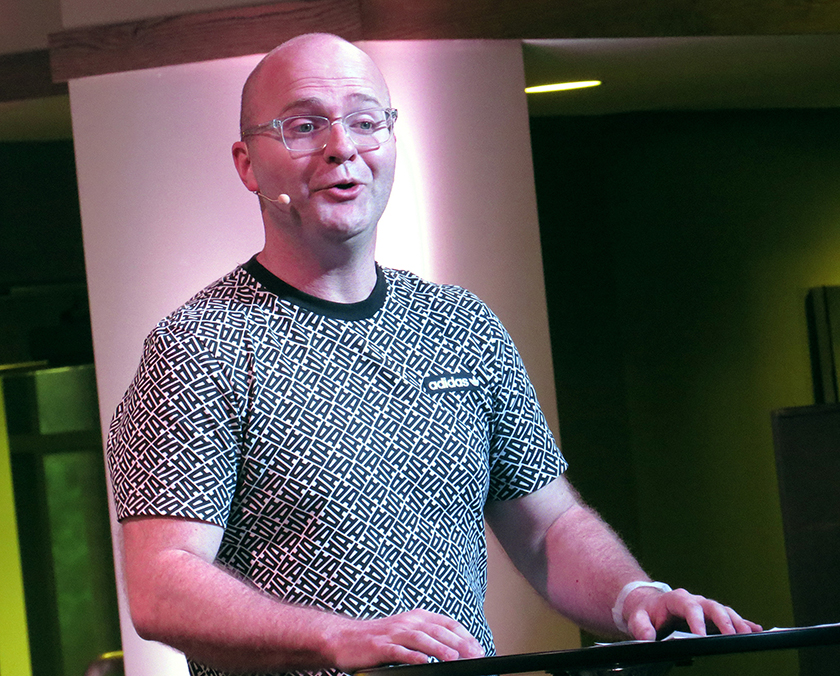
The Rev. Adam Weber, pastor of United Methodist Embrace Church, in Sioux Falls, S.D., speaks during the opening worship service at the Beyond These Walls mission conference. Photo by Sam Hodges, UMNS.
About 120 people, most of them church staff or volunteer mission leaders, but also some clergy, attended.
Keynote speakers were the Rev. Adam Weber, pastor of fast-growing Embrace (United Methodist) Church in Sioux Falls, South Dakota; Texas Conference Bishop Scott Jones and Danielle Strickland, a Christian author and advocate who shared about her work with people caught up in sex trafficking and addiction.
“This is not a time to pull back and have a theological symposium,” Strickland, who spent 22 years as a Salvation Army officer, told the group. “This is a time to go out.”
Jones echoed that theme with an address titled “Get Out of the House.” He also stressed the need for innovation.
“Most of our United Methodist churches are fully prepared to be missionally effective – if 1955 ever comes back,” he said.
Weber too championed taking risks, in both mission and evangelism.
“We’ve always been willing to try new things,” he said of Embrace. “It’s OK to fail. Failure hurts, but at least you’re stepping out and trying new things.”
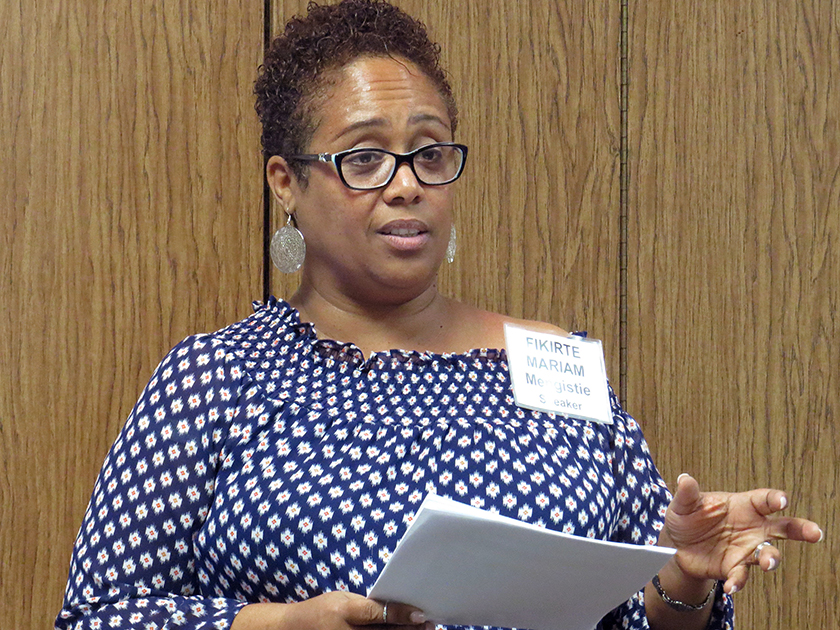
Mariam Mengistie, executive director of missions at St Luke’s United Methodist Church in Orlando, Florida, speaks on mutual transformation in mission at the Beyond These Walls conference. Photo by Sam Hodges, UMNS.
At Beyond These Walls, the workshops are where specific mission strategies get shared and analyzed. In Houston, they were also where leaders pushed for clear-eyed evaluation.
“It’s our challenge to ask the difficult questions,” said Mariam Mengistie, executive director of missions at St. Luke’s United Methodist Church in Orlando, Florida. “Are we stopping and asking, ‘Why aren’t we making a difference?’”
St. Luke’s has worked for the last eight years to re-tool its mission work, a process laid out in detail in a video talk by Lynette Fields, the church’s executive director of community transformation.
The church has adopted the goal of reducing poverty one family and one neighborhood at a time, with a focus on Orlando’s East Winter Garden area.
With partners, including Circles USA and a local bank, the church has helped residents to get out from under high-interest loans and acquire skills that lead to better-paying jobs.
Mengistie told her workshop that St. Luke’s mindset also has shifted, based on developing real friendships and collaborative leadership with East Winter Garden residents.
“It’s not about the volunteer experience,” she said of mission work. “It’s about listening to the community.”
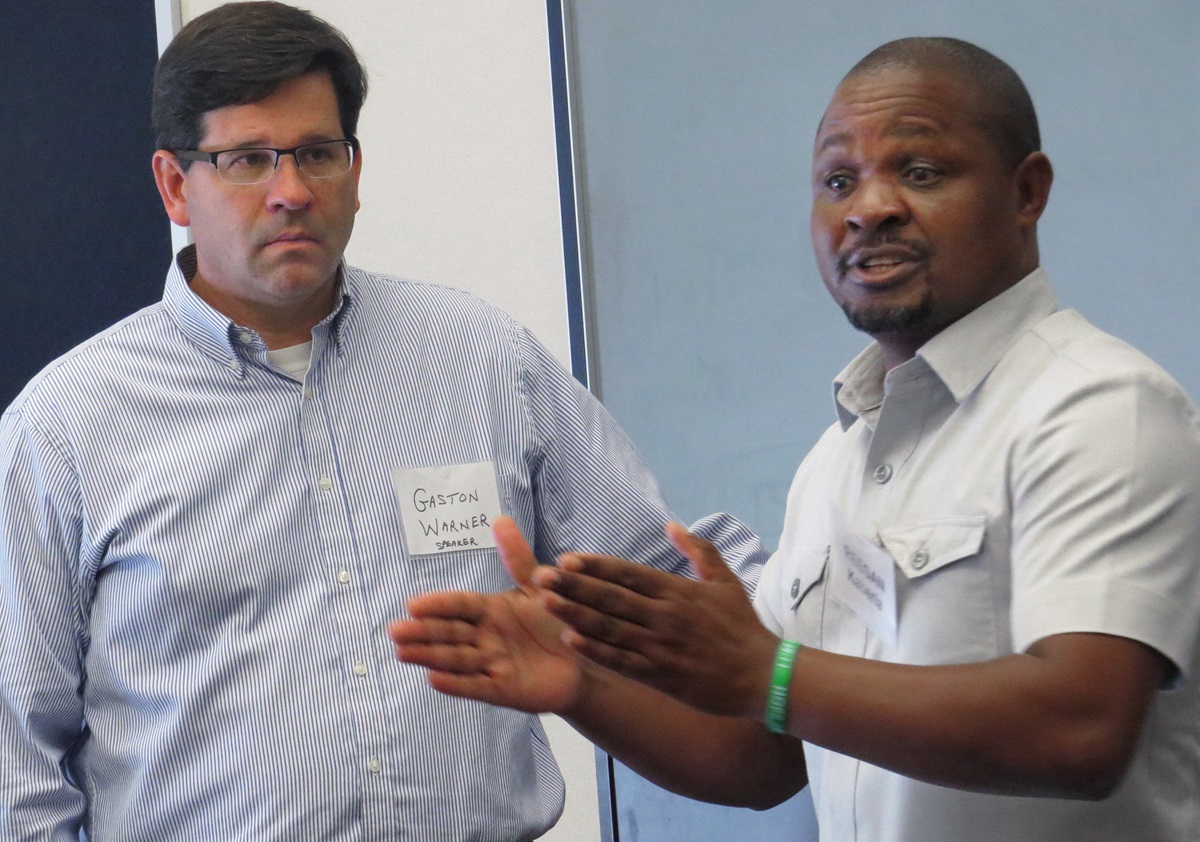
There are times, particularly in the aftermath of disasters, when relief work is absolutely the Christian response, said the Rev. Gaston Warner.
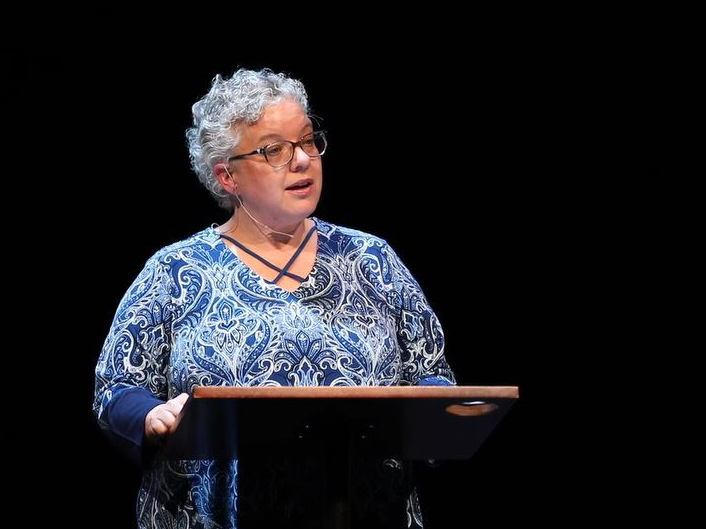
In a TED Talk-type presentation for the nonprofit Significant Matters Inc., Lynette Fields described how and why her church, St. Luke's United Methodist Church in Orlando, Florida, changed its approach to mission work.
But in addressing poverty, he added, Christians often focus on actions – such as how many meals or items of clothes they’ve provided – rather than outcomes.
Warner, a United Methodist elder, leads ZOE, a ministry for orphans and other vulnerable children and youth in Africa and India. He and Kenyan colleague Reegan Kaberia used their workshop to describe the ministry’s journey from a relief model that encouraged dependency to one of empowerment and sustainability.
ZOE’s three-year program, developed by Rwandan social worker Epiphanie Mujawimana, is intensely focused on giving the young people farming and other vocational skills with which they can support themselves and boost their communities.
Warner is convinced that ending the “relief mentality” is crucial.
“That’s the secret in the sauce,” he said. “They’ve accomplished it, with some support from behind.”
The Houston conference also featured workshops on how local churches can be more effective in ministry with public schools, immigrants and other people on the margins.
Easy answers were in short supply. That’s good, believes the Rev. Tom Bassford, executive director of Significant Matters Inc., a Christian nonprofit that advises churches on sustainable missions.
“We say to churches, ‘It’s complicated,’” said Bassford, who led a workshop titled Missions 3.0. “If it were easy, it would be done already. But we can do it. We can do ‘complicated.’ It just means we need to think a little harder and work in more constructive and strategic ways.”
Hodges, a United Methodist News Service writer, lives in Dallas. Contact him at (615) 742-5470 or [email protected]. Contact them at 615-742-5470 or [email protected]. To read more United Methodist news, subscribe to the free Daily or Weekly Digests.
Like what you're reading? Support the ministry of UM News! Your support ensures the latest denominational news, dynamic stories and informative articles will continue to connect our global community. Make a tax-deductible donation at ResourceUMC.org/GiveUMCom.


