
How many churches have you planted this year?

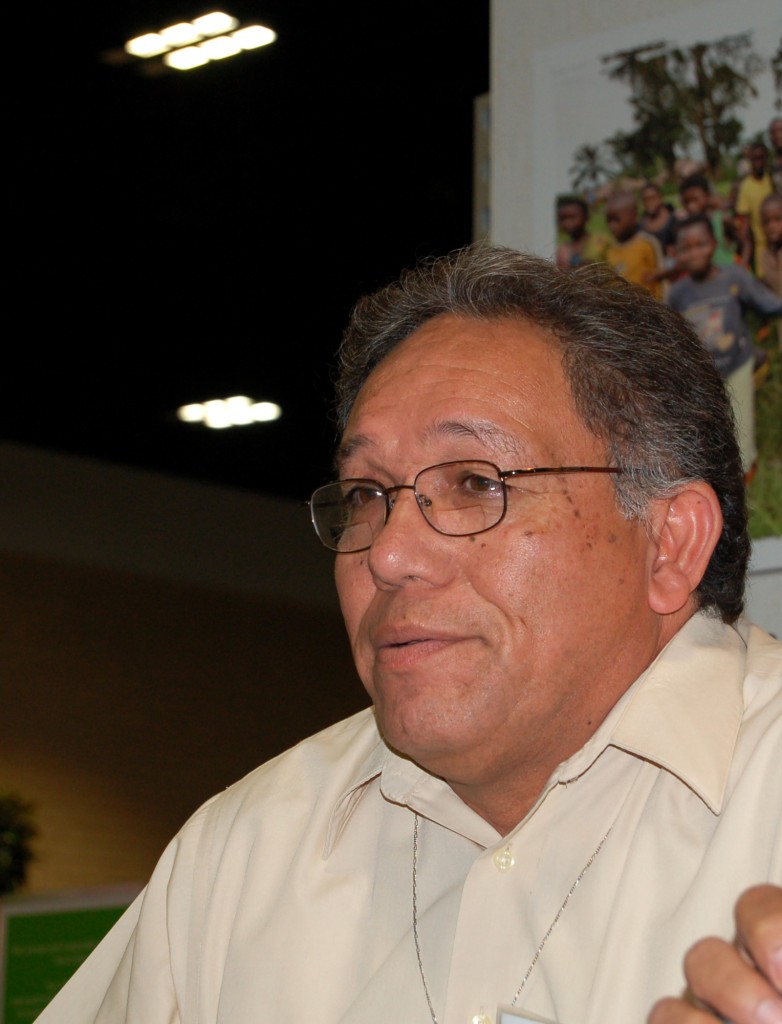
Commissioned just today, the Rev. Jaime Vázquez came from Mexico eight months ago and was sent as a National Plan for Hispanic/Latino Ministries to the state with the toughest immigration laws in the country—Arizona.

Yet during those eight months, he has already planted five new churches within the Hispanic community. “There are a lot of people who are suffering, many families are being separated,” Vázquez explains. “Even though there is a great concentration of Hispanics, there are very few Hispanic churches. There are many Hispanics in the US, and they obviously need to hear the voice of God.”

Vázquez has served as a Methodist minister in Mexico for 30 years, eventually becoming a bishop. When his episcopal term was up, he decided to apply to be a missionary with Global Ministries.

Five new church plants in eight months—kind of makes you wonder what the rest of us have been doing all these years as church membership declined.


Like what you're reading? Support the ministry of UM News! Your support ensures the latest denominational news, dynamic stories and informative articles will continue to connect our global community. Make a tax-deductible donation at ResourceUMC.org/GiveUMCom.

Sign up for our newsletter!

Subscribe Now
Worship
Retired Bishop Peggy A. Johnson. Photo courtesy of the author.

Helping people ‘hear the Gospel’ in new ways

May is National Speech-Language-Hearing Month, a good time for United Methodist churches to examine ways to improve hearing accessibility.
Social Concerns
The Rev. Christopher P. Momany. Photo by Kristen Schell.

For every righteous ‘no,’ there must be a holy ‘yes’

Methodism’s Wesleyan-Holiness heritage holds principles that can be applied to today’s struggles around human dignity.
Church History
The Methodist Church’s 1956 General Conference meets from April 25 to May 7 in the municipal auditorium in Minneapolis. On May 4, the first Friday of the legislative assembly, the delegates voted to make women eligible for full clergy rights. “Now it is up to us to prove in clear and deep witness to the whole church our consecration and our loyal devotion to the work of the Kingdom of God,” said Margaret Henrichsen, a General Conference visitor, after the vote. In 1967, she became the first U.S. woman appointed district superintendent. Photo courtesy of Archives and History.

Why the 1956 women-clergy vote matters

Seventy years ago, the Methodist Church supported full conference membership for women clergy — a decision that would have a resounding impact when The United Methodist Church formed in 1968 and even today.

United Methodist Communications is an agency of The United Methodist Church

©2026 United Methodist Communications. All Rights Reserved