
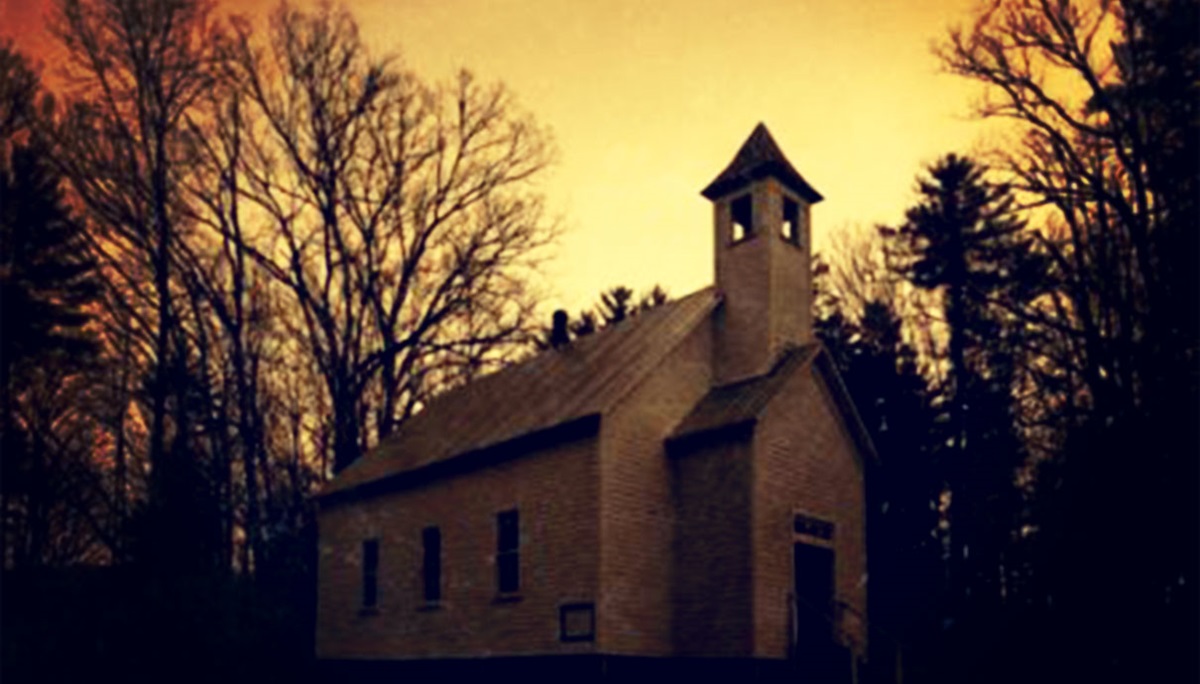
Churches are havens of safety, places of welcome and respite, a heavenly pathway to God - but that doesn't mean they can't have their own tales of unexplained happenings.
Some United Methodist churches, cemeteries and at least one home of a well-known Methodist reportedly have things that go bump in the dark (or daylight) - when no living soul is around. The most famous Methodist of all - John Wesley - was believed to have had a ghost in his childhood home that his family named "Old Jeffrey."
"Old Jeffrey" plagued the Epworth Rectory with mysterious loud noises and knockings and made his first "appearance" Dec. 2, 1716. Susanna Wesley was quoted as saying, "there was such a noise in the room over our heads, as if several people were walking, then running up and down stairs that we thought the children would be frightened." As she and her husband searched the house in vain for the culprit, Old Jeffrey continued "rattling and thundering in every room, and even blowing an invisible horn at deafening decibels."
Old Jeffrey disappeared in January 1717 just as suddenly as he had appeared.
Spooky sightings
What do United Methodists believe about Halloween?
The United Methodist Church does not have an official statement or position regarding Halloween.
Church members are free to make their own decisions about their participation in Halloween activities. Local churches can decide if they wish to offer traditional or alternative activities for children at Halloween. This article, Kids can lead the way: trick or treat for UNICEF offers suggestions for celebrating in ways that are not only safe, but also focus more on giving than receiving. For an eco-friendly celebration, consider giving Fair Trade chocolate or Reverse Trick-or-Treating to help provide small cocoa farmers a fair living wage and an opportunity to break out of the cycle of poverty.
Many congregations offer "trunk or treat" in which they invite church members to decorate their cars, park in the church parking lot and distribute treats from their car trunks.
United Methodist News Service posed a question on Facebook, asking if anyone else had unexplained spooky church sightings to report.
Nancy Jill Hale wrote: "Several years ago, a friend and I were practicing a duet on the piano in the sanctuary one evening when it was dark. While we were playing, we both stopped at the exact same moment, looked across the room, and said, 'Did you see that?' Of course, nothing was there, but we both swore we saw the shadow of someone walking down the aisle. Needless to say, we quickly closed up the piano and left the building!"
Another responder, Jeff Bobin, said,"One time, after midnight, I was in my church office when I heard what sounded like banging in the basement. When I went downstairs, I couldn't find anyone, and then I heard footsteps on the floor above me in the hall. I never did find anyone in the building, and the only door that someone could go out had a bell that rang when you opened the door."
Little girls and wailing banshees
Searching the Internet turned up some other United Methodist related ghost stories like the man in a black business suit who glides up and down the aisles in First United Methodist Church, Evanston, Ill.
Visitors have reported “"Wailing banshees” occupy the now-abandoned Oakey Streak Methodist Church in Red Level, Ala. Visitors have reported hearing the laughter of a small boy and a little girl who skips down the dirt driveway leading to the church.
A former pastor at Spencer United Methodist Church in Ohio said his church's location might explain some of the strange things that have been reported at the church, including water fountain coming on and handles turning. The church is located next to a famous and well-documented haunted cemetery. People report seeing one or two lanterns floating free in the air as if held by invisible hands.
Bringing in the ghosts
And then there's Cass Community United Methodist Church in downtown Detroit that imports ghosts and goblins every year at Halloween.
Members of the 129-year-old church use classrooms and their basement to construct a spooky maze. Tickets are $10 and mostly bought by college students from nearby schools. The Rev. Faith Fowler, who opens the house each weekend night leading up to Halloween by whacking a heavy chain against the walls, said the church uses the money for their extensive neighborhood ministries.
The fundraiser fits the neighborhood, one of the most dangerous urban areas in the United States, Fowler said.
Michael Chance, one of the UMNS Facebook responders, has an answer to all the ghost stories in churches: "Noises of other unexplained goings on? Just the saints of the church watching over things."
*Gilbert is a multimedia reporter at United Methodist Communications, Nashville, Tenn.
A version of this story was published on Oct. 26, 2012.
News media contact: Kathy L. Gilbert, Nashville, Tenn., (615) 742-5470 or [email protected].
Like what you're reading? Support the ministry of UM News! Your support ensures the latest denominational news, dynamic stories and informative articles will continue to connect our global community. Make a tax-deductible donation at ResourceUMC.org/GiveUMCom.


