
Key points:
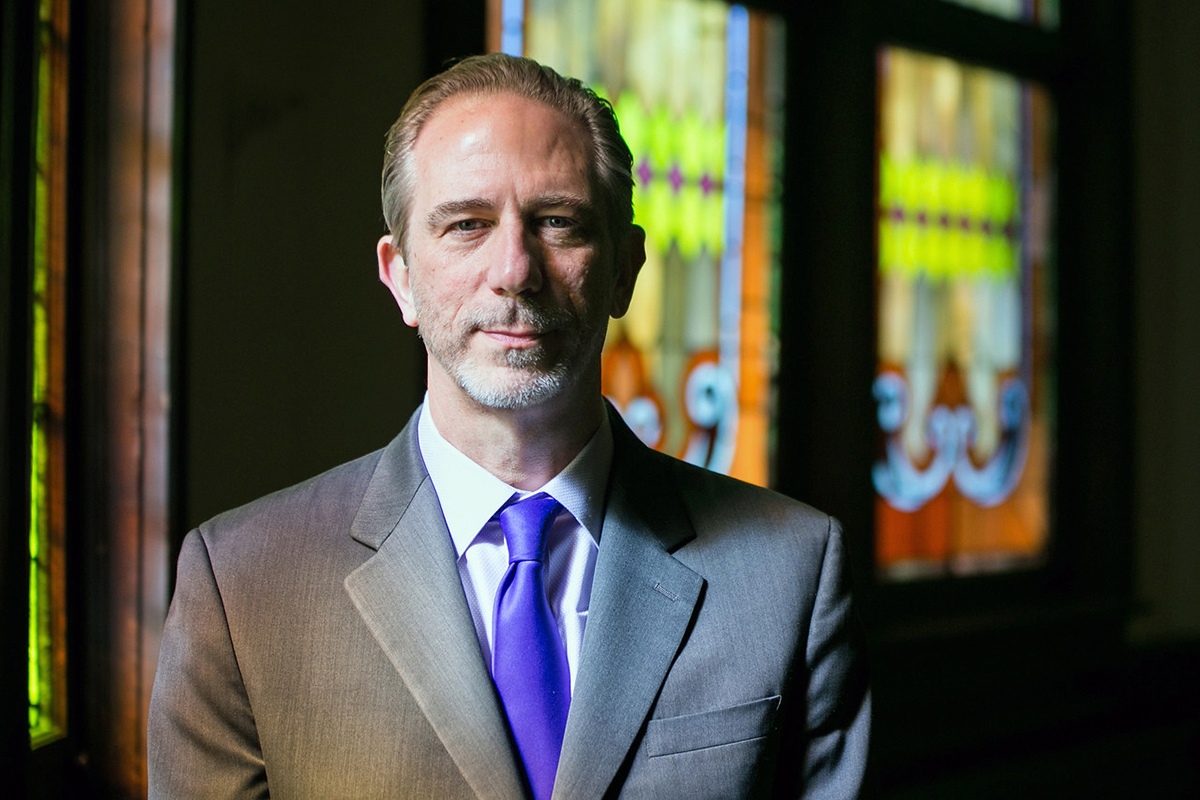
- David P. Gushee is a Baptist and a much-published Christian ethicist, as well as past president of the American Academy of Religion and Society of Christian Ethics.
- He agreed to answer UM News’ questions about the ethical issues arising out of the disaffiliation struggle facing The United Methodist Church.
- He weighed in on specifics, such as whether a pastor committed to leaving the denomination should help decide annual conference matters, but offered his overall hope that the different sides in the conflict will “leave the judgment to God and let each other go in peace.”
How might a non-Methodist Christian ethicist respond to some of the ethical questions arising from the disaffiliation struggle underway in The United Methodist Church?
To find out, United Methodist News contacted the Rev. Dr. David P. Gushee, a Baptist and the Distinguished University Professor of Christian Ethics at Mercer University in Georgia.
Gushee is past president of the American Academy of Religion and the Society of Christian Ethics, and his many books include “Introducing Christian Ethics,” “Kingdom Ethics,” “Changing Our Mind” and “Still Christian.”
He’s a popular speaker and co-hosts a podcast, “Kingdom Ethics,” though it’s currently on a break.
Gushee answered by email the following questions posed by UM News.
More than a few United Methodist clergy have helped lead their congregations out of the denomination, and others are in the process of doing so. Is it right for such pastors to retain their United Methodist clergy credentials, even for a short time, and for them to vote in regular and special called annual conference sessions of a denomination they clearly no longer support?
Clergy who are leaving the UMC to join a new denomination should leave their former community in peace. They should accept that two communities are now being formed where there was once one. Once having made the choice to enter the new community, they should allow the direction of their former community to be decided by those who remain in it. While there may not be a rule against the tactic of voting in the old community having already decided to enter a new one, such a tactic is obviously unethical. It is wrong because it is meddling in the affairs of another faith community. It would be like initiating a divorce, moving out and getting involved in a new relationship — while meanwhile actively sabotaging the spouse left behind.
What are the ethical obligations of pastors who mean to stay United Methodist but face a strong push for disaffiliation from within their congregations? Do they let discernment/debate go forward? If so, is it OK for them to advocate for remaining United Methodist or should they maintain neutrality?
I can only answer this question as a Baptist, and a certain kind of Baptist at that. Whether it is relevant to the UMC is up to others to judge. I believe in the delicate combination of pastoral leadership and democracy in church life. I believe in a communal discernment process, led and equipped by pastors and others with the relevant vocation, training and qualifications, but ultimately undertaken by the congregation as a community. Pastors who wish their church to remain United Methodist should make their case for why, substantively, but they should understand themselves to be leading a discernment process that belongs to the community. How well pastors have equipped their churches for such a discernment process will only be visible as it is undertaken.
If folks have been on the church rolls as members but haven’t meaningfully participated in the church for years, should they vote on whether the church leaves the denomination?
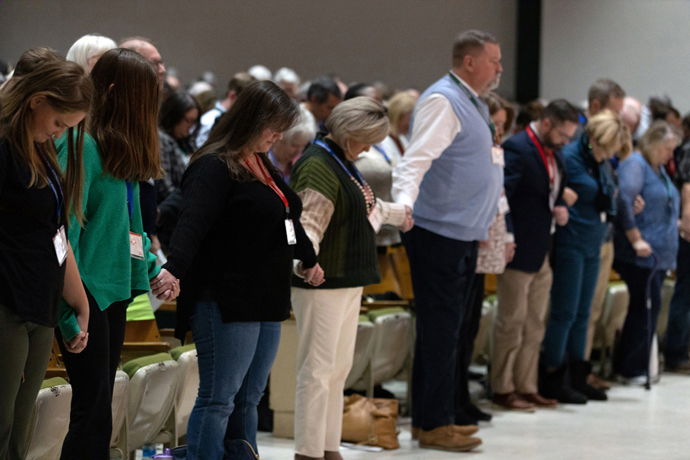
This is a question that we certainly do face in Baptist churches as well. People who have really opted out of congregational life long ago should, like the pastors who are leaving the UMC, leave their former churches well enough alone. However, this so often does NOT happen. It speaks to how limited and damaged is our actual practice of Christian community in most of our congregations.
Many people say the current congregation should decide about denominational affiliation. Others point to the past generations who gave their time and money to the church, assuming it would remain United Methodist. Is there a way to balance the current majority’s preference with a respect for tradition and the saints who came before?
The decision can only be made by the current congregation. It must be assumed that the congregation will take due consideration of its own heritage.
United Methodist annual conferences are responsible for administering disaffiliations. The conferences are dealing with competing demands: To facilitate exits when congregations clearly want to leave and to serve as responsible stewards of United Methodist resources so pensions can be paid and disciple-making can continue. Any advice for dealing ethically with this tension?
It would seem to me that the settlement of financial affairs requires impartial professional guidance according to best practices in relevantly similar cases. As for the mission of the churches, including disciple-making, it must be assumed (sadly) that a season of disruption is unavoidable. On the other hand, is it not a time in which competing visions of what it means to be and to make Christian disciples will be very much on display in all the churches?
Subscribe to our
e-newsletter
United Methodist connectionalism — including the episcopacy, the clergy appointment system and local church apportionments paid to support seminaries and general church agencies — is clearly under great stress. Are there things you, as a Baptist oriented to a more congregational approach, admire in connectionalism and hope United Methodists can hold onto in a time of schism?
Congregationalism and connectionalism exist in relationship and in tension. Most Baptist congregations that I know are both fiercely congregational in governance and look for voluntary connection for a variety of purposes, including fellowship and shared mission. Pooled efforts in any community enable projects to be undertaken that would be impossible by congregations working on their own. My guess is that when this schism finally, irrevocably occurs, there will be (probably already are) very deep strains on existing UMC institutions. But I think you can nurture the hope that when the dust settles, the greater unity of the surviving UMC (and the alternative) will allow new and renewed connectionalism unhindered by the grinding, corrosive conflicts of the past.
Are there any Bible verses or stories you would have faithful United Methodists, as well as those committed to leaving the denomination, read and re-read and try to live by as difficult decisions are made? Anything that ought really to govern speech and actions?
I would send you all to Romans 14-15, with Paul’s agonized reflections on how to deal with powerful differences in Christian community. Consider Romans 14:7: Why do you pass judgment on your brother or sister? Or you, why do you despise your brother or sister? For we will all stand before the judgment seat of God.” I hope that Methodists can ultimately recognize each other as sisters and brothers in Christ, leave the judgment to God and let each other go in peace.
Hodges is a Dallas-based writer for United Methodist News. Contact him at 615-742-5470 or [email protected]. To read more United Methodist news, subscribe to the free Daily or Weekly Digests.


