

The Rev. Bence Vigh, 31, is a young pastor in The United Methodist Church in Hungary. His work with youth gives him a unique view into how the digitalization of the world shapes the lives of people in Hungary who have technology and the sharp differences for those who do not.
“I wonder how many Hungaries exist?” he asks. “How many folks, living standards, realities? I know a Hungary that is so different from mine. It is a cultural shock to arrive there, although it is only about six miles away from me.”
The charge conference he is serving, Kaposvár, also includes the Roma church Kürtöspuszta. He says the tension of commuting between so many different realities is obvious.
“In this other Hungary, no one has work and one cannot even find the daily food in the dustbin. Instead, one risks being imprisoned while collecting firewood for one’s family,” Vigh says.
“In this other Hungary, people can heat only one room during winter, and the whole family lives in it. There is no local grocery store, but only the commuting grocery car that sells overpriced goods.
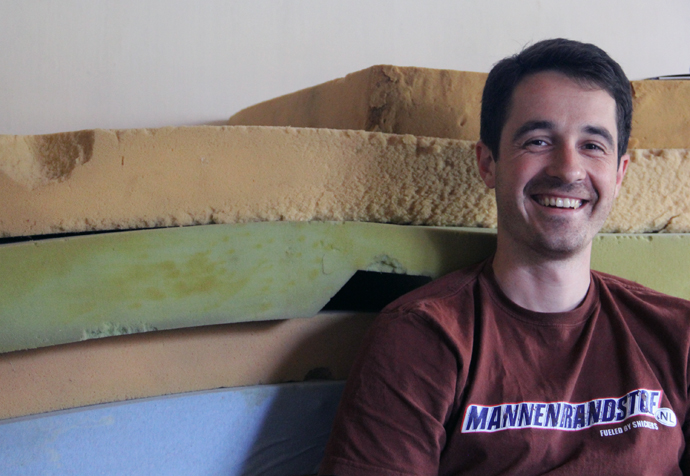
The Rev. Bence Vigh is a young pastor in The United Methodist Church in Hungary. The charge conference he is serving, Kaposvár, also includes the Roma church Kürtöspuszta. He says commuting between so many different parts of the country can be a cultural shock. Photo courtesy of the Rev. Bence Vigh, United Methodist Church in Hungary.
“The nearest hospital is about 20 miles away, and there are just two daily bus services going there and back. In this other Hungary, 20 people live in a small house, because by doing this, life is cheaper.”
Vigh is often in Kürtöspuszta – on Sundays for the worship services, but also once or twice during the week. While there, he tells children stories from the Bible, teaches them to play the guitar and discusses with them the Christian messages in the songs he teaches them.
“In this other Hungary, there are kids who learn how to bark (from animals in the village) before learning how to speak (words),” he notes. Although most inhabitants are under 14, there are no kindergartens, schools, doctors. Each child “is multiply disadvantaged, even lacking writing tables, books or colored pencils.
“In this other Hungary, thefts are regular and there is no reason to raise chickens, to have a kitchen garden or to plant flowers. In this other Hungary, the first expense in a month is paying the interests, paying the debts. In many houses, there is neither electricity nor water, and gas cannot be found anywhere.”
Teenagers become resigned and hopeless, Vigh points out. “Who knows how many people might live in this other Hungary? Who knows how many dreadful things never come to light? Who knows what should be done? And who is it who still wants to do anything at all?”

“In this other Hungary, there are kids who learn how to bark (from animals in the village) before learning how to speak (words),” said the Rev. Bence Vigh. Although most inhabitants are under 14, there are no kindergartens, schools or doctors. Each child “is multiply disadvantaged, even lacking writing tables, books or colored pencils.” Photo courtesy of the Rev. Bence Vigh.
The United Methodist Church, supported by the Fund for Mission in Europe, organizes several camps each summer in which children can play, do handicrafts, laugh, sing, and listen to stories. In these camps, the children experience appreciation and love, learning many things that are important for their personal development and for a sustainable communal life, he says.
Vigh hopes he is nurturing “small plants” that will “resist the headwind of life.”
People of The United Methodist Church regularly bring clothes, food, school equipment and other things to Kürtöspuszta. However, their aim is not only to avert an immediate crisis but also to open up real perspectives for the future, he explains.
“Another Hungary. I have been there. I have come back again and again with a certain feeling of discomfort, with unrest in my heart,” Vigh says.
“Maybe this is from God — a calling to think about my life and about my possibilities, to return, to do something. From God, who helps me to realize: In this other Hungary, I find Christ, as well.”
The Fund for Mission in Europe, an instrument of the European Methodist Council, was established after the fall of the Iron Curtain in 1990. The primary aim was to offer financial solidarity between West and East.
In 2005, a new alignment took place and the focus now is on establishing new churches, reinvigorating existing churches, supporting new mission and diaconal initiatives - and on doing this in relationships shaped by mutuality.
Donations can be made to Ministry with Roma People in Central and Southern Europe, Advance #3020676.
Schweizer is assistant to Bishop Patrick Streiff, Central and Southern Europe.
News media contact: Vicki Brown, news editor, [email protected] or 615-742-5470. To read more United Methodist news, subscribe to the free Daily or Weekly Digests
Like what you're reading? Support the ministry of UM News! Your support ensures the latest denominational news, dynamic stories and informative articles will continue to connect our global community. Make a tax-deductible donation at ResourceUMC.org/GiveUMCom.


