
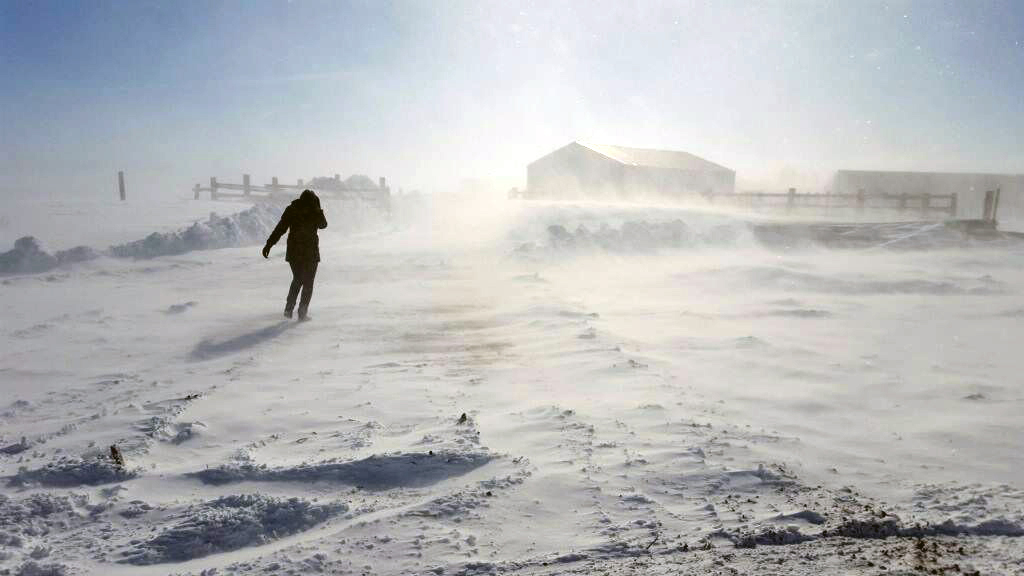
The snow was 70 to 80 inches high on Feb. 1 in northwestern Montana, home to the Blackfeet Nation. Now it’s up to 240 inches and that’s not even the worst part, said the Rev. Calvin Hill, pastor of the Blackfeet United Methodist Parish in Browning, Montana.
“It’s not the inches; it is the 70 to 80 miles-per-hour wind gusts that moves that soft snow into 16 to 20 foot drifts. You can plow the roads, but an hour later they will be filled up again,” he said, in an interview with United Methodist News Service.
How to help
Donations can be made online to these three funds:
The Yellowstone Conference Disaster Relief Fund
The Rev. Dawn Maurer Skerritt, Yellowstone Conference disaster response coordinator, said that sometimes the winds could get up to hurricane-force at 115 miles per hour.
“Snow can bury houses,” she said. “We ask for prayers for the ministry and safety for folks responding.”
The Blackfeet Tribal Council issued a state of emergency and asked for help from The United Methodist Church through the United Methodist Committee on Relief. The Yellowstone United Methodist Conference is appealing for local volunteers and donations. The conference also requested and received a $10,000 emergency grant from UMCOR.
The Blackfeet United Methodist Parish has been serving breakfast, lunch, dinner and lots of coffee for first responders to bring to people trapped in their homes. They are there for whatever the first responders need. They also are preparing emergency food packets for delivery to people stranded in their homes.
Food and firewood are the most urgent needs.
“A blessing that has come out of all this is the good relationship The United Methodist Church has been able to establish with the tribal government,” Hill said.
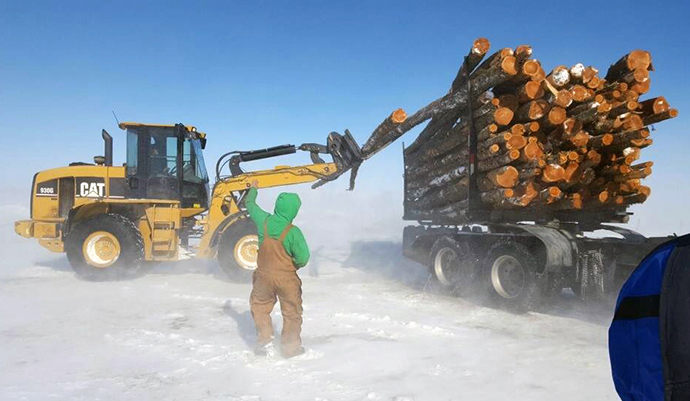
The most urgent needs are for food and firewood. Semi-trucks filled with long pine logs are delivered which volunteers then cut, split and deliver to homes in remote locations on the Blackfeet Nation. Photo courtesy of Whitefish United Methodist Church.
He said the tribe has one food pantry that they open from 8 a.m. to 5 p.m. After 5 p.m., the church’s pantry is open until 10 p.m.
The United Methodist Church has a ranch where semi-trucks filled with logs can deliver the wood. Volunteers then chop and split the logs.
The Rev. Morie Adams-Griffin, pastor of Whitefish United Methodist Church, who has been traveling out to the area, said another danger of the winds is low visibility for driving.
“I was born and raised in Montana. We are getting crazy amounts of snow,” Adams-Griffin said. He said his church has roof issues because of the snow.
“I had to hire someone this year to clear the roof. I call him the ‘minister of snow removal,’” he said, laughing.
Adams-Griffin and Hill both said they are worried about flooding after the snow starts to melt.
“The weather is changing; there is more sun,” Hill said.
“The snow will melt. Next up we will have to start thinking about sandbags.”
Gilbert is a multimedia report for United Methodist News Service, contact her at 615-742-5470 or [email protected]. To read more United Methodist news, subscribe to the free Daily or Weekly Digests.
Like what you're reading? Support the ministry of UM News! Your support ensures the latest denominational news, dynamic stories and informative articles will continue to connect our global community. Make a tax-deductible donation at ResourceUMC.org/GiveUMCom.


