
The United Methodist Church in Congo is urging civility in the wake of controversy surrounding the country’s Dec. 30 presidential election.
On Jan. 10, the Independent National Electoral Commission declared opposition candidate Felix Tshisekedi Tshilombo the new president, but allegations of voter fraud continue to mar the first democratic transfer of power since the country’s independence in 1960.
Runner-up Martin Fayulu, who led the polls leading up to the election, filed an appeal to the Constitutional Court demanding a recount. Fayulu claims to have won with more than 60 percent of the vote and alleges Tshisekedi reached an agreement with outgoing President Joseph Kabila to be named the winner.
The election process already had been hampered by insecurity, an Ebola outbreak in the region and logistical issues that left more than a million people unable to vote.
December’s elections came after two years of postponement by Kabila to hand over power at the end of his second term. After unofficial vote tallies began to surface, the government shut down the internet and text messaging.
United Methodist Bishop Gabriel Yemba Unda said he fears “the worst of the worst.”
“The people must avoid demonstrating violently. They must avoid breaking everything and burning (things) ... They have to manifest for God to intervene and find a solution to our problems,” he said.
According to the Financial Times, an analysis of two separate collections of voting data shows Fayulu to be the clear winner with nearly 60 percent of the vote and Tshisekedi finishing second with 19 percent. Emmanuel Shadary, Kabila’s chosen successor, finished third.
The Roman Catholic Church in Congo also disputed the election results.
“We find that the results of the presidential election as published by the Independent National Electoral Commission do not match the data collected by our observation mission from the polling and counting stations,” said Father Donatien Nshole, spokesman for the National Episcopal Conference of Congo, which represents the country’s Catholic bishops.
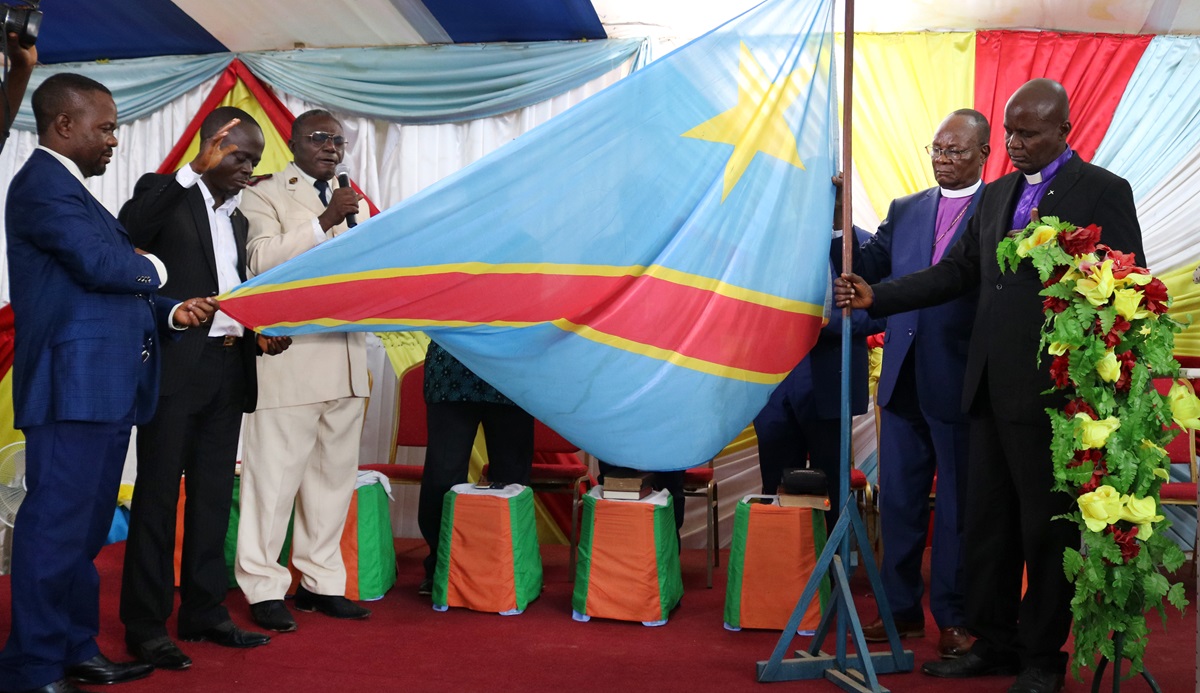
Unda, who leads the Eastern Congo Episcopal Area, said The United Methodist Church will continue to pray for peace as the country awaits a ruling by the court, which began its appeal hearing on Tuesday. The court must rule on the appeal by Saturday.
“We are men of God and we preach the word of God. We have prayed for the electoral process and continue to submit to God our prayers for peace during and after this critical moment.”
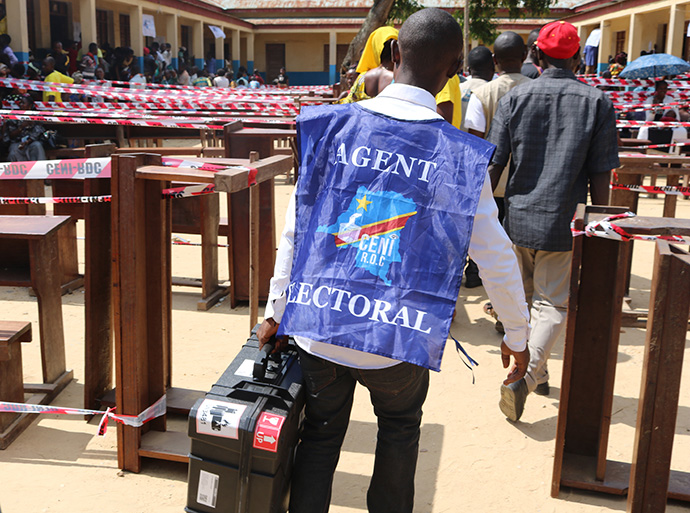
An election agent transports a voting machine to Mwanga Primary School in Kindu, Congo. Elections took place Dec. 30, but allegations of voter fraud continue to mar the first democratic transfer of power since the country’s independence in 1960. Photo by Chadrack Londe, UMNS.
The United Methodist Church played an important role in preparing for the elections. United Methodists, supported by the Board of Church and Society, trained people to use voting machines and raised awareness about a new electoral law.
Djunga Unya Shakambulu, a youth from Bethlehem United Methodist Church who participated in several simulation sessions on the voting machine, said the training allowed him to make his choice easily.
“The notions learned during the various awareness sessions allowed me to vote easily and not hang out in the voting booth,” Unya said.
More than 6,000 church members also received text messages from the bishops of the four episcopal areas in the country urging people to vote.
As the internet shutdown continues, the church has begun sending voice messages of peace in partnership with United Methodist Communications through its UMConnect system.
Central Congo Bishop Daniel Lunge Onashuyaka and Unda recorded messages calling for peace and tolerance. The bishops urged church members to do their part in promoting peace.
“Dear brother and sisters in Christ, let each one of you do all his/her best to keep and maintain a peaceful atmosphere wherever you are around the country,” Lunge said in his voice message.
He sent the message in the three main languages spoken in his episcopal area: French, Lingala and Otetela. Unda sent his message in French and Swahili.
Lunge said he is thankful for United Methodist Communications’ support in accompanying the Democratic Republic of Congo before, during and after the electoral process.
“A good friend is known during challenging times,” he said.
Louis Loma Otshudi, the episcopal director of the Central Congo Episcopal Area, said it is a blessing to be member of The United Methodist Church.
“When other people are stuck, with luck of internet and text messages, our church find another way to reach as many people through voice messages from the bishops,” he said.
One week before the elections, the Commission for Integrity and Electoral Mediation, which is chaired by Unda, organized a prayer service for peace. Bishops and leaders of other religious denominations also attended the gathering.
“We must first put God before all things. We thought of organizing this worship, because we must ask God to give us peace before, during and after the elections,” Unda said during the service. “Without peace, we cannot do anything. We must also pray for the country, the nation. Put the candidates in the hands of God. We do not want our country to fall into violence.”
Londe is a communicator for the East Congo Conference. Pierre T. Omadjela, field project manager for the Congo Central Conference, contributed to this report.
News media contact: Vicki Brown at (615) 742-5470 or [email protected]. To read more United Methodist news, subscribe to the free Daily or Weekly Digests.
Like what you're reading? Support the ministry of UM News! Your support ensures the latest denominational news, dynamic stories and informative articles will continue to connect our global community. Make a tax-deductible donation at ResourceUMC.org/GiveUMCom.


