Bishops oppose racism, back immigration reform

The far-reaching statement dealt with sources of animosity in the various regions of the world where United Methodists worship.

  • In the Philippines, the statement calls for "breaking down the barriers between mainline society and tribal peoples," with equal rights in land possession and free education for all.
  • In Africa, the statement condemns the legacy of colonialism.
  • In Europe, racism is a growing problem "with political parties openly working against minority, ethnic and religious communities," the document says.
  • In the United States, the document cites a "rapid escalation of violence related to race, ethnicity, sexual orientation and religious preference."

The statement also denounced the rise of terrorism and "the religious persecution of various faith communities, including Christians."

"The church is called to decisively and directly counter these acts and engender and empower a 'perfect love that casts out all fear,'" the statement says, citing 1 John: 4:18.

Addressing persecution

The statement also denounced the rise of terrorism and "the religious persecution of various faith communities, including Christians."

"The church is called to decisively and directly counter these acts and engender and empower a 'perfect love that casts out all fear,'" the statement says, citing 1 John: 4:18.

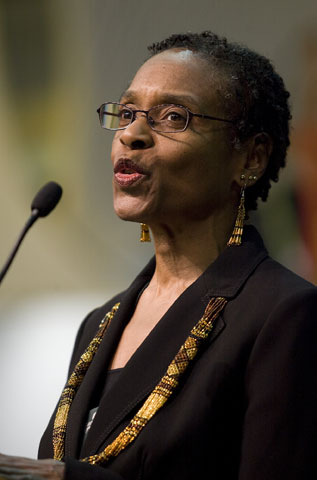
"This is a statement that helps us to speak up in our areas," said Bishop Rosemarie Wenner of Germany, "by taking the spirit and our common witness as a council to say that we as people of faith stand up against racism, which unfortunately is all over the world."

*Hahn is a multimedia news reporter for United Methodist News Service.

News media contact: Heather Hahn, Nashville, Tenn., (615) 742-5470 or [email protected].

Comments will be moderated. Please see our Comment Policy for more information.
Comment Policy

Like what you're reading? Support the ministry of UM News! Your support ensures the latest denominational news, dynamic stories and informative articles will continue to connect our global community. Make a tax-deductible donation at ResourceUMC.org/GiveUMCom.

Sign up for our newsletter!

Subscribe Now
Global Health
Bishop Mande Muyombo (right) helps a woman settle into her new adapted bicycle in Kamina, Congo. At left are lay leader Kiluba Yolola Elie and Pastor Joseph Kasongo Mukolomone. The United Methodist Church distributed 97 bicycles to people living with disabilities in the North Katanga Conference. The initiative is funded by United Methodist partners in the North Georgia Conference. Photo by Yamba Kisonga Barthélémy, UM News.

Adapted bicycles break barriers, enrich lives in Congo

The United Methodist Church provides mobility assistance to people with disabilities in Kamina, including members of other religious denominations.
Church History
A 1961 map shows the location of churches and the borders of episcopal areas within the Central Jurisdiction, which the Methodist Church established to segregate Black members from the wider church. The union that formed The United Methodist Church in 1968 dissolved the Central Jurisdiction. During the Council of Bishops spring meeting in Jacksonville, Fla., bishops explored the legacy of the Central Jurisdiction as denominational leaders consider changes to the geographic jurisdictional system. Image courtesy of Archives and History.

Lessons from past shape jurisdictions’ future

United Methodist bishops learned more about the legacy of the segregated Central Jurisdiction and history of the jurisdictional system, as leaders contemplate possible changes to that system.
Faith Stories
Bishop Tracy S. Malone (far right) celebrates her oldest daughter’s wedding in 2023. From left are bride Alexis Malone Woolery and her sister, Ashley Malone Brown. Bishop Malone’s daughters say they have something special planned this year on Mother’s Day, since the day coincides with Woolery’s graduation and Woolery is the mother of a 1-year-old son. Photo by Sekoprince Studios.

Bishops’ children shed light on life with their moms

The daughters of four United Methodist episcopal leaders share what life is like when their mothers are the leaders of hundreds of churches.

United Methodist Communications is an agency of The United Methodist Church

©2026 United Methodist Communications. All Rights Reserved