
Sixteen years ago at General Conference, Louisiana Conference delegate Nancy Carruth stood at the podium and proposed a United Methodist-related school that could transform the continent of Africa.
She returned to the podium May 3, to thank the denomination for making that vision a reality.
"Africa University is committed to making a difference," said Bishop Nkulu Ntanda Ntambo, the school’s chancellor and chairman of its board of directors. "Thank you, General Conference, for all you have done; already we are changing Africa."
The school opened in Mutare, Zimbabwe, in 1992 with 40 students who met in converted barns and chicken coops. Today, five faculties of education, agriculture, business administration, health and science and theology, boast 1,283 students in 30 debt-free state-of-the-art buildings. A total of 1,059 people from 24 nations have graduated from that school.
In the 2001-04 quadrennium, United Methodists pledged $2.5 million to the Africa University Fund, representing 29 cents for each member of the denomination.
At this session of General Conference, Africa University is requesting the same levels of funding. However, they are encouraging annual conferences to pay their full apportionment. In past years, giving has only totaled 90 percent of what was budgeted, said Lloyd Rollins, director of development for the school.
"If full apportionments (of $2.5 million) were paid, we would have, on average, an additional quarter of a million dollars to spend on this ministry," Rollins said. University officials say the church’s support is becoming even more essential as the school expands its programs.
General Conference saw a video and heard a report from James Salley, associate vice chancellor for institutional advancement, about the school’s new programs. Those include a partnership that will address the AIDS pandemic in Africa and the development of political leaders to direct the many African nations devastated by famine and civil unrest.
Methodist Healthcare of Memphis and St. Jude Children’s Research Hospital in Memphis, Tenn., have joined with Africa University to equip health care professionals from Zimbabwe to deal with AIDS in their communities through education, prevention, treatment and infection control efforts.
Suzana Lourenco, a 2000 Africa University graduate and the first woman in her family to graduate from college, told the delegates about how a 19-year old woman recently died leaving two children, one of whom is HIV-positive. Similar stories are told throughout Africa, where 7,000 people a day die from AIDS.
The school has also developed an Institute of Leadership and Government, to which the U.S. government contributed $1.8 million. The U.S. ambassador to Zimbabwe, Joseph Sullivan, told the delegates, via the video, that this effort will provide a generation of people to "fulfill a vision of peace."
During the report on Africa University, Salley called the bishops of the Northeast Jurisdiction forward, singling them out for their special contributions to the school.
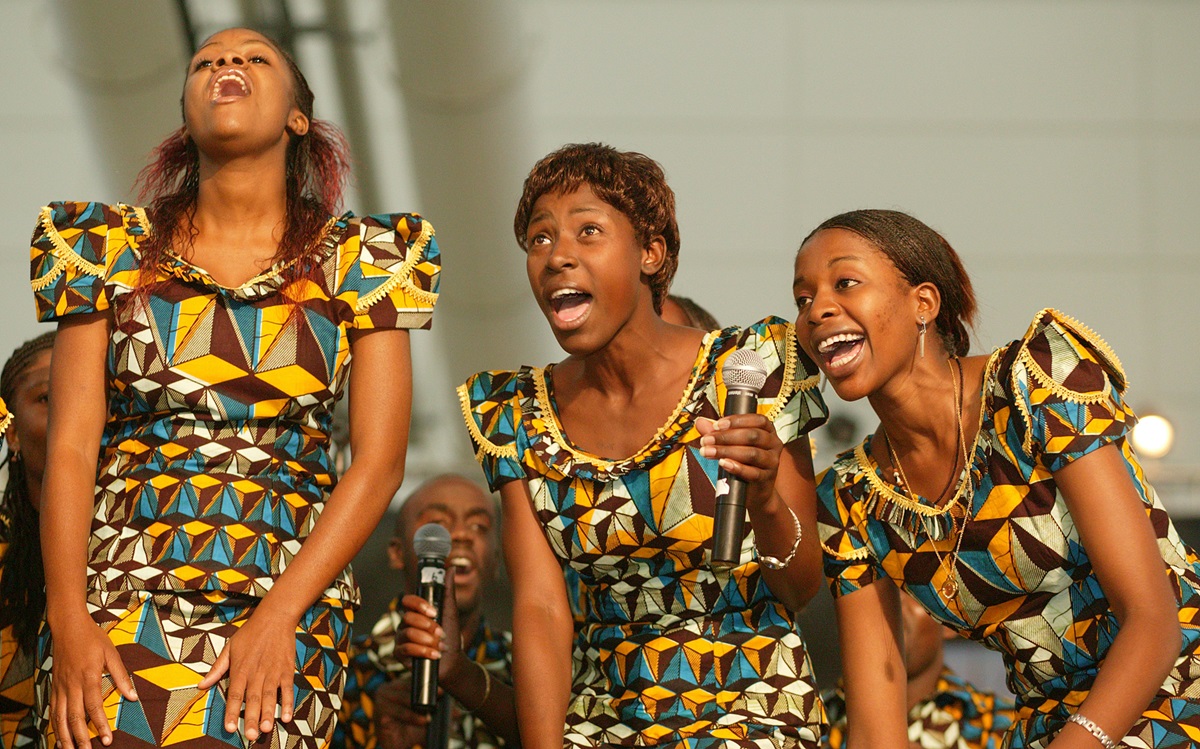
A 32-member Africa University choir was scheduled to sing at the morning service. However, because of difficulties in receiving visas, only 16 were able to attend. The choir members wandered throughout the hall shaking hands with the bishops and delegates as they sang.
"It’s not finished yet," said Salley, concluding the report. "There’s a sense in which we’ve just begun.
*Lauber is associate editor for the United Methodist Church’s Baltimore-Washington Annual Conference.
News media contact: (412) 325-6080 during General Conference, April 27-May 7.
After May 10: (615) 742-5470.
Radio Stories
Related
Like what you're reading? Support the ministry of UM News! Your support ensures the latest denominational news, dynamic stories and informative articles will continue to connect our global community. Make a tax-deductible donation at ResourceUMC.org/GiveUMCom.


