
Key points:
- A Jewish Israeli providing a protective presence for beleaguered Palestinian villagers in the West Bank says his courage is a “gift from God.”
- What you think you know before traveling to the Middle East doesn’t matter. Once you’ve seen the plight of the people, you can’t un-see it, writes the Rev. John Wagner.
- The authors of Kairos Palestine II use the phrase “costly solidarity.” It’s what Jesus meant by asking us to take up a cross and follow him, Wagner says.
Commentaries
This past November, I was once again in the Middle East, my fourth trip since 2008 but my second in about a year. The main reason was to attend the unveiling of the Kairos Palestine II document, an urgent call from Palestinian Christians to address the violence, which has not stopped after the supposed ceasefire in October.
Christians from around the world, including four fellow United Methodists, were in Bethlehem to offer support.
Part of that support required that we visit with those suffering from increasingly deadly settler attacks. It was on such a visit that I encountered a Jewish Israeli in one of the last remaining viable villages in Area C, which is the largest portion of the West Bank and now completely controlled by Israel.
He was staying the night to provide “protective presence,” i.e., showing up as an Israeli to stand between the villagers and those who are attacking them at night.
I asked him how he had acquired the courage to risk not only violence from extremists but also estrangement from family and friends. He smiled broadly and said, “It’s a gift from God!” Danger all around, and yet he was improbably joyful.
I heard this as a testimony to the very real blessing that comes from hearing God’s call and then being able to do one’s duty, despite the cost. Jesus speaks to this in Matthew 19:29: “And everyone who has left houses or brothers or sisters or father or mother or wife or children or fields for my name’s sake will receive a hundredfold and will inherit eternal life.” In this man’s case, it was risking his relationships by standing in solidarity with those who are grieving the loss of their land and their loved ones in an ongoing genocide.
And of course, I then have to ask myself that same inescapable question, namely, what might God be calling me to do just now? And I hope you are asking that same question as you read this.
I’ve received pushback for being an advocate for Palestinian rights, but mostly people want to tell me I’m brave and thank me for taking a stand. Like most anyone, I like that kind of affirmation, but the better part of me is always wary.
First off, I’ve not been that brave. The trips into the West Bank and the border to Gaza are organized by Palestinian Christians who are very savvy, and our safety is clearly of paramount importance. Secondly, I’m wary because such compliments seem to make me out to be the exception — admired perhaps, but still the exceptional person with an exceptional calling. That’s not true.
Here’s the thing: I first went to Israel and Palestine because I got an unexpected free trip. My annual conference needed to be represented on a delegation, the person who was scheduled to go got sick, and I was asked to take her place at the last minute. I was an unlikely candidate in that I had studied post-Holocaust theology and literature in graduate school, had visited Auschwitz in college, and was (and still am) openly sympathetic to Jewish trauma. But when I saw the occupation and met Palestinians who had suffered because of it, and Jewish Israelis who confirmed the truth about Israel’s history, I changed.
Subscribe to our
e-newsletter
This is what tends to happen to those who get to go on what might be called an “authentic” trip, not a pilgrimage for tourists that only visits holy sites. And it really doesn’t matter so much what you think you know going in. Once you’ve seen it, you can’t un-see it.
It’s not even a liberal versus conservative thing; I know individuals who are now in the Global Methodist Church who had their minds changed as well and then acted on their new understanding. I know persons who were once committed Christian Zionists who did a complete turnaround.
Does it take a trip to Israel/Palestine to get motivated to take a stand for justice? It was probably necessary in my case, but my admiration is reserved mainly for those who haven’t seen, and yet believe — something Jesus commended as well. Such Christians have trusted the testimony of our missionaries as well as the evidence now being shown very clearly on our computers and television screens. They’ve discerned for themselves that it isn’t fake news.
The other day I saw a video of a little girl lying on a makeshift hospital bed, a victim of the violence in Gaza. Her eyes were wide open in fear and bewilderment and my heart just automatically went out to her. Then came the devastating news that she had since died from burns over 90 percent of her body. I can’t shake that image, and I know I’m not the only one. These and other videos and photos are motivating Christians and non-Christians to move out of their comfort zones and into some kind of protest. This is a good thing.

One of the phrases the authors of Kairos Palestine II used repeatedly is “costly solidarity.” It’s what Jesus meant by asking us to take up a cross and follow him, and telling us how essential it is for our salvation. This is especially true for those with unique privileges in their societies, people like me and perhaps you as well.
There are many causes these days, many crosses to bear. Violence and injustices near and far that must be addressed, and God bless you if you are already figuring out how to do that. I’m simply hoping that for some of you, this calling I’m describing might be a cross that you are personally willing to take up, a “costly solidarity” — whatever that might mean in your context — that is calling out to you just now.
United Methodists for Kairos Response has long promoted divestment and boycotts as a means of nonviolently resisting oppression, and it also has practical suggestions for those who want to take action, including solidarity trips like the ones I’ve taken.
For those who still hold to some aspects of Christian Zionism, please check out the website maintained by former Christian Zionists. There’s also the Methodist Liaison Office doing good work in Jerusalem that you might want to check out. And I simply have to include United Methodist Advance Specials like Tent of Nations, a valiant community of Palestinian Christian peacemakers that is in clear danger of being taken over by the Israeli government.
If you want to be in touch with me personally, you can email me at [email protected]. I don’t have all the answers, but I will do my best to answer your questions honestly and then point you in the right direction.
In closing, I want to go back to that Israeli man who was standing guard over a Palestinian village. For him, it was not only a matter of being in solidarity with those beleaguered villagers, but a kind of amazing grace that allowed him to be in solidarity with God’s will. As Christians, we might describe it as a “come to Jesus” moment. Usually mysterious, often painful and sometimes frustratingly unclear, but for us these moments are part of saving our souls. And we know it will cost us something.
This world needs us to open ourselves to such costly encounters with the living Lord and then act on them.
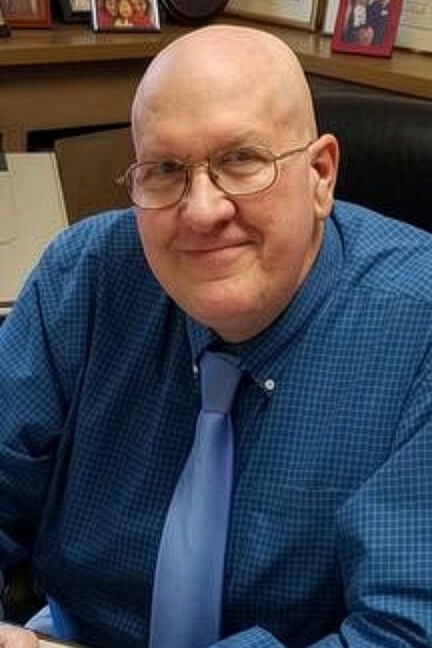
Wagner is a semi-retired United Methodist pastor, currently serving part-time at Seven Mile United Methodist Church in the West Ohio Conference. He is also
a founder and former co-chair of United Methodists for Kairos Response.
News media contact: Julie Dwyer, news editor, [email protected]. To read more United Methodist news, subscribe to the free UM News Digest.


