
General Conference delegates had their say last year. Now, it’s up to annual conference voters to determine whether five amendments will become part of The United Methodist Church’s constitution.
In the coming months, the voters will consider changes that address matters of gender equality, inclusiveness in membership, delegate and bishop elections, as well as bishop accountability.
To be ratified, a constitutional amendment first requires at least a two-thirds vote at General Conference, which happened in May 2016. Then, it must win at least a two-thirds majority of the total voters at annual conferences around the world.
The voting starts at the Liberia Conference, scheduled for Feb. 13-19, and will continue through potentially early next year, depending on when annual conferences schedule their meetings. The Council of Bishops will certify the results at its next meeting after the voting concludes.
Here is an overview of the amendments in the order submitted to annual conference voters.
Gender equality
This amendment declares, “men and women are of equal value in the eyes of God.” It goes on to say that maleness and femaleness are characteristics of human bodies, not the divine. It also asserts that The United Methodist Church will “seek to eliminate discrimination against women and girls, whether in organizations or in individuals, in every facet of its life and in society at large.”
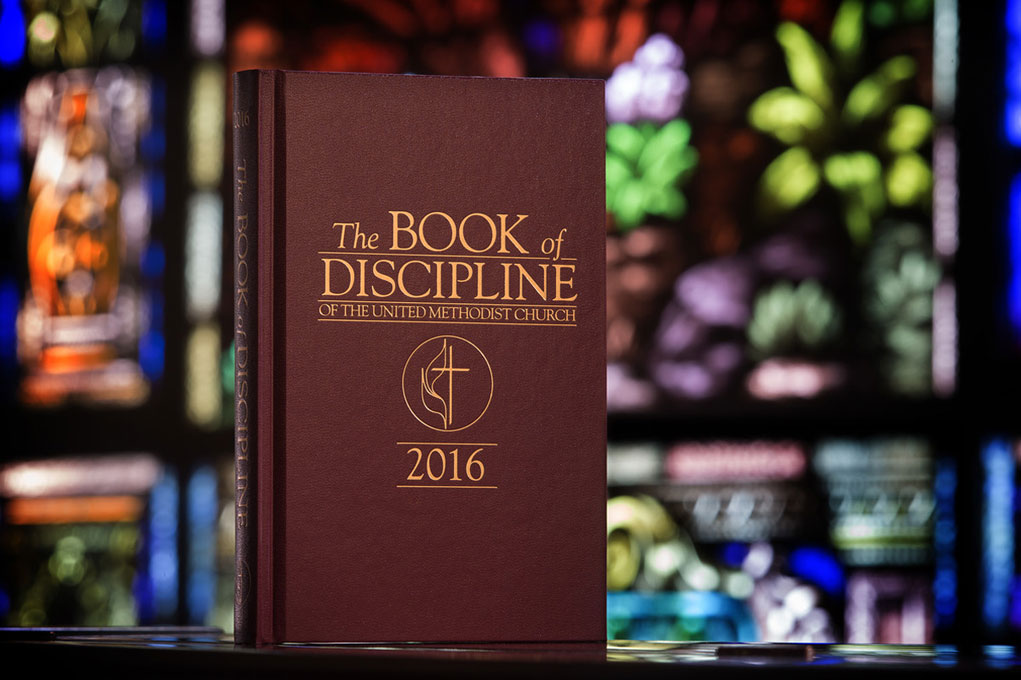
The amendment, if ratified, would become the new Paragraph 6 in the Book of Discipline, the denomination’s governing document. Subsequent constitutional paragraphs would be renumbered. General Conference approved the measure by a vote of 746 to 56.
Carol Napier, a Sunday school teacher for 17 years at Glenn Memorial United Methodist Church in the North Georgia Conference, submitted the amendment.
“I hope that this amendment will help churches remember that girls and women are of equal worth to boys and men because everyone is made in the image of God,” she said. “I believe that when churches remember and live out of this truth in all of their ministries, then villages, cities and even nations will be transformed to reflect Jesus’ perfect love for all of us.”
Inclusion in membership
If adopted, this amendment would add gender, ability, age and marital status to the list of characteristics that do not bar people from membership in the church. Specifically, the amended Paragraph 4 would say that no member shall be “denied access to an equal place in the life, worship and governance of the Church because of race, color, gender, national origin, ability, age, marital status or economic condition.”
The vote at General Conference was 509 to 242.
The United Methodist Commission on the Status and Role of Women submitted the amendment and put together a site seeking to answer frequently asked questions about the changes. For example, the agency notes that gender refers simply to men and women. The amendment also has the support of United Methodist Women, Discipleship Ministries and the DisAbility Ministries Committee.
“Paragraph IV, Article 4 protects people in The United Methodist Church against discrimination in membership based on age, gender, marital status and ability, while still protecting exclusivity in groups like United Methodist Women, youth groups and singles ministries, to name a few,” said Dawn Wiggins Hare, top executive of the Status and Role of Women agency. “We are enthusiastically supporting the ratification of this amendment for the betterment of The United Methodist Church.”
Delegate elections
This amendment to Paragraph 34 specifies that elections of delegates to General Conference as well as jurisdictional and central conference meetings will include open nominations from the floor at annual conference sessions. The measure also calls for the election of delegates “by a minimum of a simple majority of the ballots cast.”
General Conference supported the amendment by a vote of 767 to 22.
Paul Clinton Law of the Democratic Republic of the Congo submitted the amendment. The current provision in Paragraph 13 states that delegates “shall be elected in a fair and open process by the annual conferences.” Law said that is “unduly vague in some cultures without a democratic tradition.”
Bishop elections
This amendment to Paragraph 46 states that central conferences are to elect bishops at a regular, not an extra, session of the central conference “except where an unexpected vacancy must be filled.” General Conference voted for the change by 621 to 15.
Lonnie D. Brooks, a member of the Alaska Conference, said the amendment aims to treat bishop elections in the central conferences — church regions in Africa, Asia and Europe — in much the same way they are treated in U.S. jurisdictions.
When bishops are elected in a special session, he said, “some of the delegates who would be present at the regular session will either not be present at a special session or will be placed in a hardship condition by the call of a session for the purpose of electing bishops.”
Bishop accountability
Under this amendment to Paragraph 50, General Conference can adopt provisions for the Council of Bishops to hold individual bishops accountable. General Conference approved the amendment by 715 to 79.
The Western Pennsylvania Conference submitted the legislation to address a ruling by the denomination’s top court, the Judicial Council. That ruling holds that it is unconstitutional for the Council of Bishops to hold its members accountable. Currently, any complaints against bishops are to be handled in the jurisdictions or central conferences where they are elected.
The Rev. Robert Zilhaver, who wrote the legislation, said the goal is to keep primary responsibility for a bishops’ accountability where they are elected, while also creating a mechanism for the Council of Bishops to step in for global accountability if needed. Zilhaver is the senior pastor of DuBois Lakeside United Methodist Church in Pennsylvania.
“It moves us to a position, where in our church we might hold ourselves accountable for a sin that rises to global expressions,” he said, pointing to the example of a bishop holding slaves, which led to the denomination’s split in 1844. At the same time, he said, he wants to protect “cultural expressions from being labeled a sin and being prosecuted.”
Hahn is a multimedia news reporter for United Methodist News Service. Contact her at (615) 742-5470 or [email protected]. Julu Swen, a communicator in Liberia, contributed to this story. To read more United Methodist news, subscribe to the free Daily or Weekly Digests.
Like what you're reading? Support the ministry of UM News! Your support ensures the latest denominational news, dynamic stories and informative articles will continue to connect our global community. Make a tax-deductible donation at ResourceUMC.org/GiveUMCom.


